
Supplier quality problems rarely give you a warning. One missed requirement or unchecked vendor can turn into recalls, audit findings, or angry customers. That pressure lands on your team, not the supplier.
Supplier quality management software keeps supplier oversight organized without constant follow-ups. It centralizes supplier data, inspections, audits, and corrective actions in one system.
This article compares the leading supplier quality management software platforms on the market.
You’ll see how each system handles supplier oversight, compliance, and quality execution so you can decide which one suits your operation.
TL;DR
These are the best supplier quality management software platforms on the market:
- TLM
- AssurX
- Kodiak Hub
- SafetyCulture
- JAGGAER
Why Supplier Quality Management Software Is No Longer Optional
Supply chain disruptions hit revenue. According to Procurement Tactics, 94% of companies see a negative revenue impact from disruptions, while only 6% have full supplier chain visibility.
That gap leaves quality failures and compliance issues undiscovered until auditors or customers find them first.
As supplier networks expand, manual oversight breaks down. Quality managers lose audit trails. Procurement leaders lose supplier performance history.
Supplier corrective action requests stall without ownership or deadlines. Problems resurface during audits, inspections, and customer reviews.
Supplier quality management software enforces supplier qualification, records audit outcomes, and tracks corrective actions to closure.
It replaces inconsistent supplier handling with documented processes that withstand audits and customer scrutiny.
What Does Supplier Quality Management Software Do?
Supplier quality management software manages how suppliers enter, operate within, and remain approved in an organization.
It handles supplier qualification, records approvals, and tracks supplier status against quality standards and regulatory requirements.
The system runs quality audits from planning through signoff. It captures findings, issues supplier corrective action requests, assigns owners, and enforces deadlines.
Electronic signatures secure approvals and changes for audit readiness.
It also maintains a continuous record of supplier performance. Audit results, corrective actions, and supplier issues stay connected to specific materials and services.
Procurement and quality teams reference the same supplier information during supplier reviews and sourcing decisions.
5 Best Supplier Quality Management Software Tools
Many supplier quality tools record activity without enforcing outcomes. They log audits or inspections but fail to manage supplier follow-through.
Below is a comparison of supplier quality management tools used in regulated environments.
1. TLM
Managing the risk of nonconforming materials entering production is a core requirement for organizations that follow International Organization for Standardization (ISO) quality standards.
TLM supports supplier controls required under the ISO 9001 and ISO 13485.
The supplier management software connects supplier approval, audits, inspections, purchasing, and corrective action within one platform.
Key Supplier Quality Features
- Customizable supplier approval statuses linked to approved parts and materials
- Supplier audit templates and scorecards aligned with quality standards
- Receiving inspection statistics tied to supplier records
- Automated alerts for supplier reviews and expiring approvals
- Secure supplier portal for corrective and preventive action (CAPA) responses
- Assigned ownership for supplier reviews and follow-up
- Central supplier records with customer relationship management capabilities
- Cost estimating and quantity discount pricing linked to suppliers
Supplier Quality Connected Across the System
TLM uses Fusion Technology to integrate supplier management with quality, materials, risk, and purchasing modules.
Suppliers link to the parts they supply, related inspections, control plans, and risk and opportunity records.
Those links trigger inspection requirements, approval rules, and purchasing controls without manual workarounds.
Audit-Ready Supplier Oversight
Supplier audits, nonconforming materials, and corrective actions move through enforced workflows with approvals, deadlines, and electronic signatures.
Suppliers access current specifications and respond through secure links. Internal teams retain authority over approvals and records, supporting regulatory reviews and customer audits.
Schedule a demo to review supplier approvals and audits in TLM!
2. AssurX
Image source: assurx.com
AssurX is a supplier quality management system (QMS) focused on supplier records, issue tracking, and compliance documentation.
It helps quality teams manage supplier information, communications, and quality issues in one system.
AssurX supports regulated environments, including Food and Drug Administration (FDA) and ISO requirements, along with hazard analysis and critical control points (HACCP).
The system uses configurable workflows to manage supplier qualification, audits, inspections, and corrective actions based on risk.
Key Supplier Quality Features
- Central supplier records for contacts, documents, and certificates
- Risk-based supplier qualification and requalification workflows
- Supplier audit scheduling, including offline and remote audits
- Supplier scorecards for tracking performance
- Issue tracking for delays and product quality issues
- Supplier portal for communication, document exchange, and signatures
- Alerts for certificate expiration and inspection findings
- Secure audit trails with electronic signatures compliant with 21 CFR Part 11
AssurX records supplier communications, nonconforming material reports, and corrective actions inside the system. Risk scoring and dashboards help teams review trends from audits and supplier corrective action requests.
3. Kodiak Hub
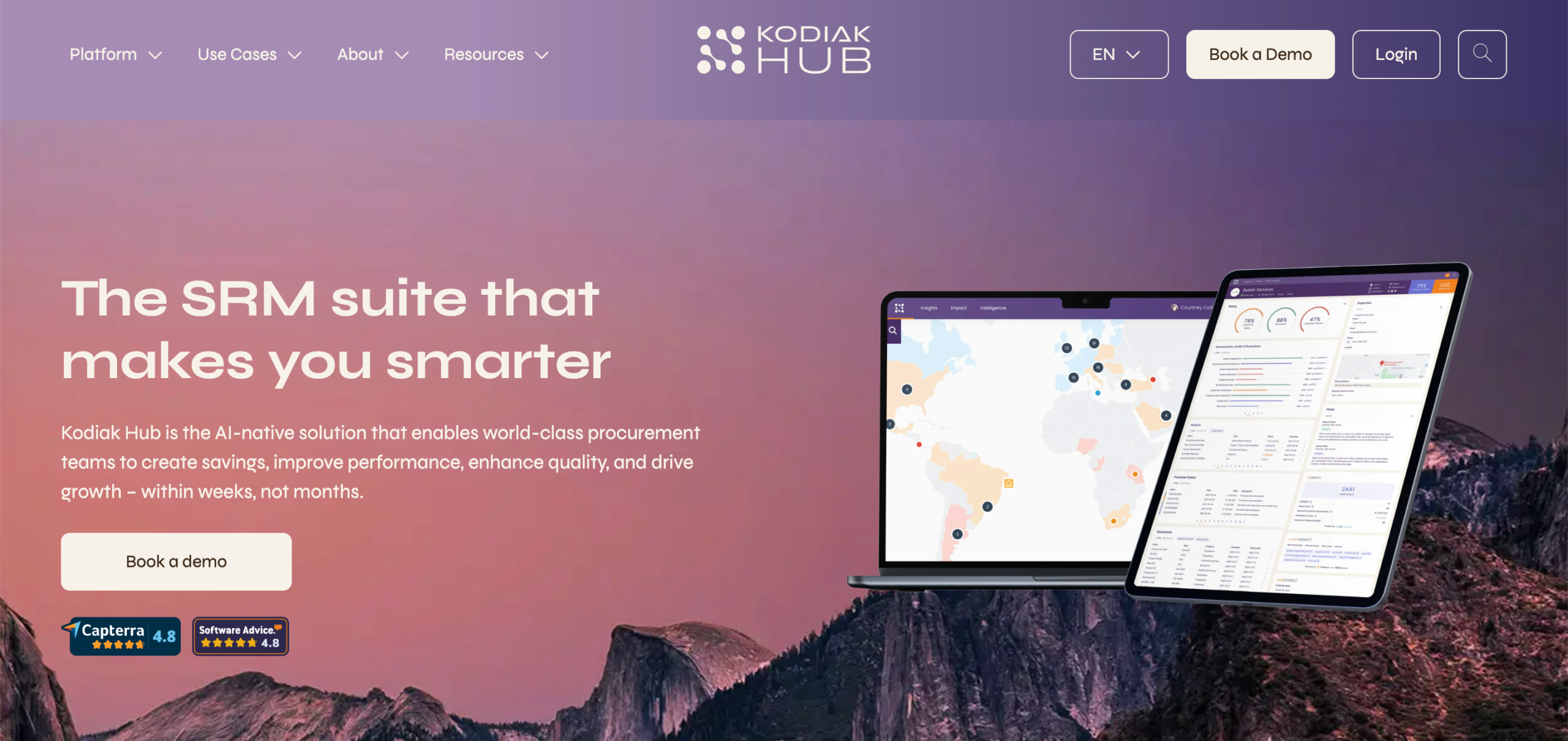
Image source: kodiakhub.com
Kodiak Hub is a supplier management system that handles supplier quality through assessments, audits, performance ratings, and supplier collaboration.
Supplier quality in Kodiak Hub focuses on how suppliers perform over time.
Teams use the platform to manage audits, inspections, and corrective action plans while keeping supplier interactions and documentation in one place.
This setup supports consistent monitoring of supply chain quality without relying on email or separate tools.
Key Supplier Quality Features
- Supplier assessments, audits, and inspection management
- Corrective action plans (CAPs), claims, and improvement projects
- Supplier performance ratings with configurable criteria
- Supplier onboarding, qualification, and validation workflows
- Central supplier information and documentation records
- Mobile auditing app for on-site visits
- Supplier collaboration tools for improvement efforts
- Automated monitoring of supplier and geopolitical risks
Kodiak Hub uses artificial intelligence (AI) to analyze supplier data and external risk signals such as financial ratings and geopolitical events.
Procurement teams use these insights to monitor supplier performance, identify supply chain risks, and guide improvement discussions with suppliers.
4. SafetyCulture
Image source: safetyculture.com
SafetyCulture is an operations management solution that supports supplier quality through inspections, audits, and corrective actions.
It focuses on how teams execute checks, document findings, and respond to issues using mobile-friendly tools and digital checklists.
Supplier quality in SafetyCulture runs through inspection-based workflows. Teams schedule supplier audits, complete inspections on-site or remotely, and generate reports immediately.
When quality issues appear, the system assigns corrective actions and tracks them to closure, creating a clear audit trail for internal reviews and regulatory requirements.
Key Supplier Quality Features
- Digital supplier audits and inspections using mobile checklists
- Shared templates to standardize inspection practices
- Corrective action assignment and follow-up tracking
- Real-time dashboards and reporting
- Audit trails to support compliance reviews
- Integration with existing systems and workflows
- Preventive maintenance and work instruction support
- Performance monitoring for sites, products, and teams
SafetyCulture emphasizes speed and adoption. Teams update inspection criteria quickly, respond to findings without delay, and keep supplier interactions documented inside the platform.
5. JAGGAER
Image source: jaggaer.com
JAGGAER manages supplier quality through procurement and sourcing workflows. Supplier quality operates as part of the supplier management process, not as a standalone quality system.
Suppliers onboard through a self-service portal with built-in compliance checks and document validation. Buyers review documentation, confirm requirements, and activate suppliers without manual follow-ups.
Quality expectations stay visible inside supplier profiles, so audits, remediation actions, and performance history influence sourcing decisions.
Key Supplier Quality Features
- Guided supplier onboarding with compliance validation
- Supplier lifecycle management from onboarding through performance review
- Supplier scorecards and performance metrics
- Audit planning and documentation through the supplier portal
- Corrective action and development plans tied to supplier performance
- Supplier communication and document exchange through one portal
- Integration with enterprise resource planning and sourcing systems
JAGGAER includes an AI layer, JAGGAER AI (JAI), that monitors supplier performance signals and risk indicators.
Procurement teams use this data to trigger corrective project plans or restrict sourcing when issues persist.
Connect Suppliers, Inspections, and Corrective Actions in TLM
Supplier quality isn’t just about passing audits. It’s about working with suppliers you can trust, meeting regulations without last-minute stress, and reducing risk before nonconforming materials reach production.
That only works when supplier quality management software operates inside the quality management system.
When tools operate outside the QMS, information gets delayed, decisions lose context, and the same problems return.
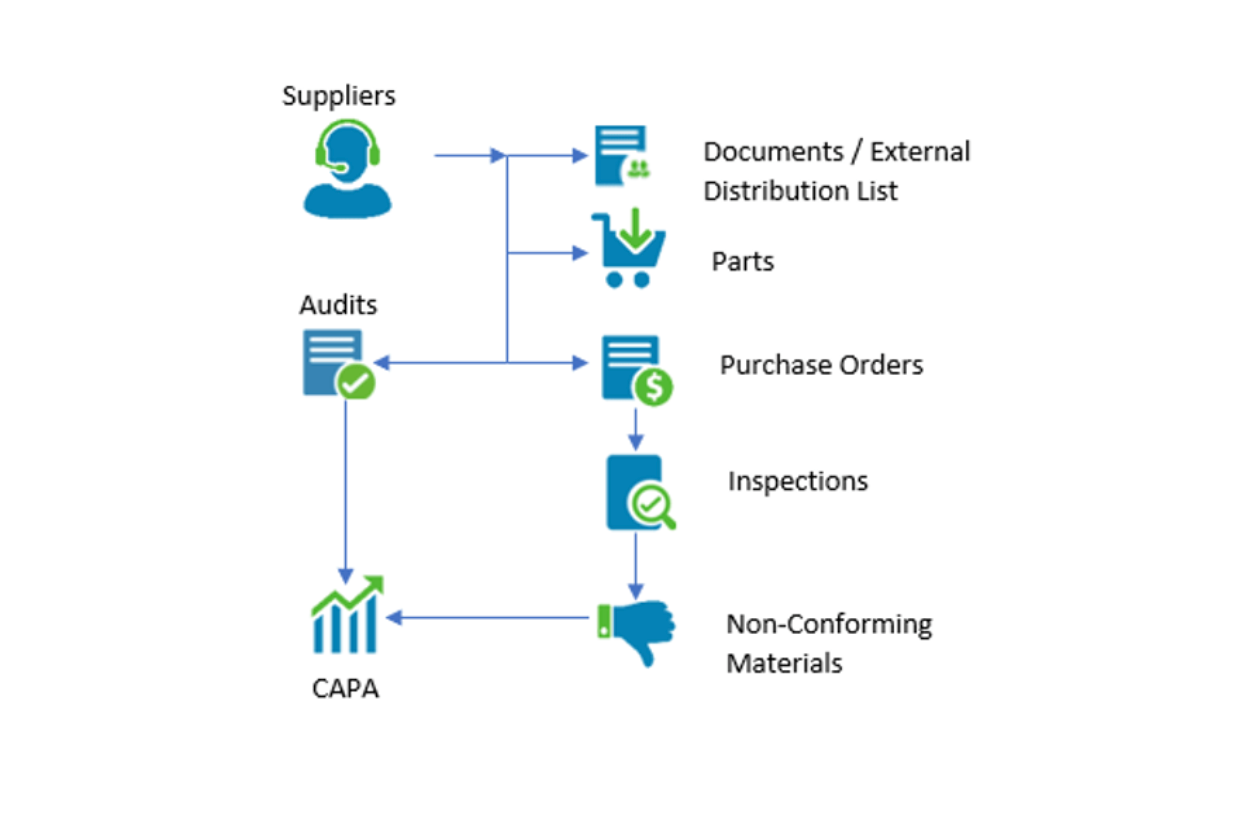
TLM keeps supplier quality part of everyday quality work. Supplier approvals, audits, inspections, nonconforming materials, corrective actions, and risk records stay connected.
Purchasing reflects how suppliers perform. Inventory responds to inspection results. Sourcing adjusts when corrective actions don’t hold.
For manufacturers, this connection delivers a competitive advantage. Quality data stays usable, and supplier relationships stay accountable.
Implementing supplier controls becomes part of normal business operations, not another system to manage.
FAQs About Supplier Quality Management Software
What is a supplier quality management system?
A supplier quality management system is software that controls how suppliers meet quality requirements. It manages supplier approvals, audits, inspections, nonconforming materials, and corrective actions.
What is the best QMS software?
The best QMS software supports daily quality work in one place. For manufacturers, that means managing supplier quality, inspections, corrective actions, and risk together.
Systems like TLM focus on keeping supplier quality embedded inside the QMS rather than handled separately.
Is SAP a QMS software?
SAP is an enterprise resource planning (ERP) system, not a dedicated quality management system.
It includes quality modules, but many organizations use separate QMS tools for audits, corrective actions, and supplier quality.
What is supplier management software?
Supplier management software focuses on supplier onboarding, record maintenance, and support for procurement decisions. It tracks contracts, performance, and communication.
Supplier quality management software goes further by managing audits, inspections, and corrective actions tied to quality standards.