
Paper documents slow quality processes. Manual routing, missing signatures, and outdated files turn daily work into a series of setbacks. Audit preparation becomes tedious when records sit in binders or shared drives.
A paperless quality management system (QMS) helps solve those issues. It replaces manual tasks with a digital system for document control, quality control, and corrective and preventative actions.
This article explains what paperless QMS software is and why more organizations adopt it. You’ll also see how the top five platforms compare and find which system suits your operation.
What Is Paperless QMS Software?
Paperless QMS software is a digital quality system that replaces a paper-based QMS with electronic records and automated workflows.
It helps companies manage quality documentation, training, and compliance within one integrated platform. Teams use this digital document management system to maintain accuracy and track data in real time.
The software supports audit readiness, continuous improvement, and consistent manufacturing procedures across departments and suppliers.
Why Businesses Are Moving to Paperless QMS Solutions
Companies adopt paperless QMS solutions to create consistency and control across their quality processes. Digital systems reduce manual input, record every action, and maintain quality documentation in real time.
Teams use them to manage audits, handle supplier records, and monitor training without relying on physical files.
The software supports compliance and helps organizations follow industry best practices for accuracy and accountability.
A paperless document management system also helps companies lower costs tied to printing and storage. You can allocate those resources to production, services, and continuous improvement.
Manufacturers and other regulated industries value the quick access to data that digital QMS software provides.
It helps them respond faster to warranty issues, prevent quality risks, and maintain audit readiness at all times.
5 Best Paperless QMS Software Options for 2026
Choosing paperless QMS software requires understanding how each platform supports quality processes and compliance.
The summaries below highlight key features, strengths, and trade-offs of five well-established platforms.
1. TLM
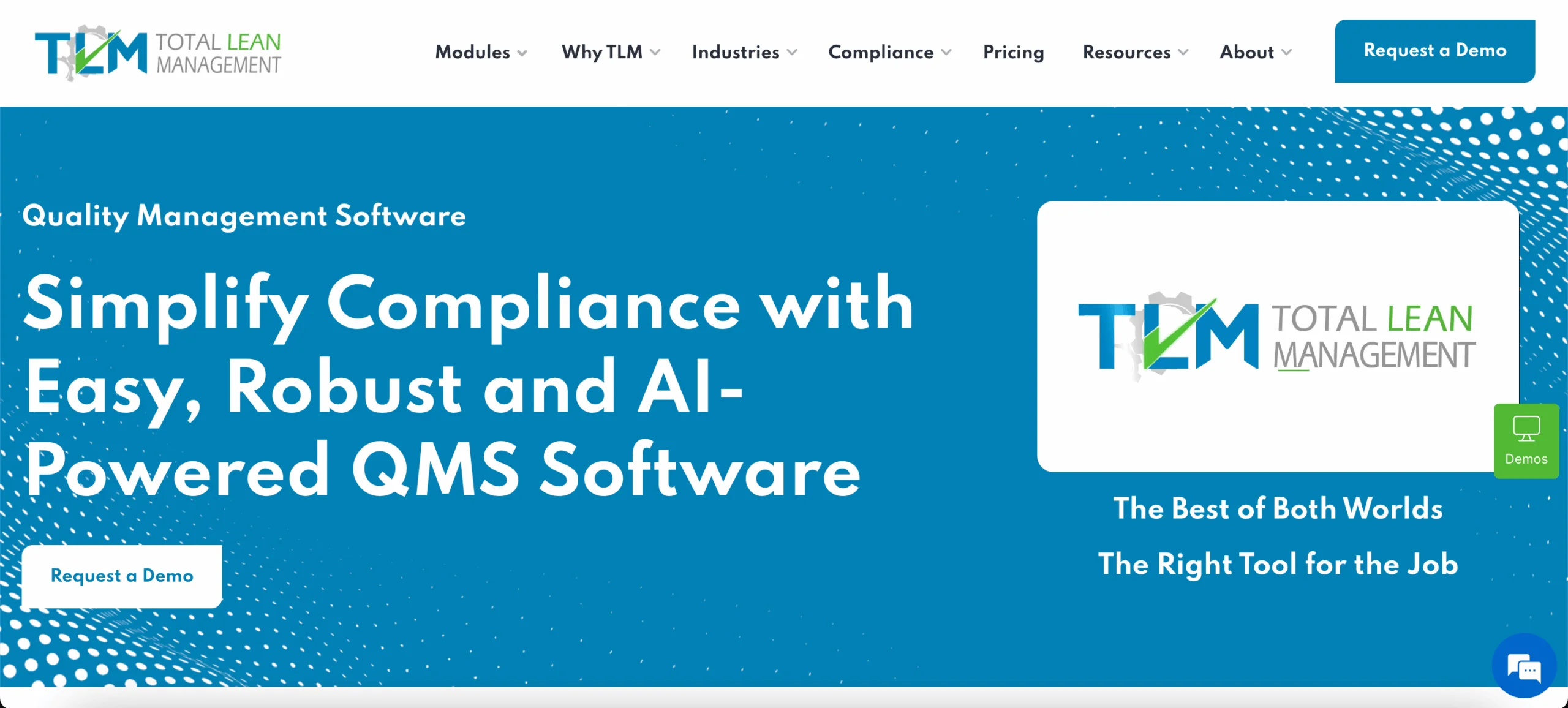
Total Lean Management (TLM) helps companies replace paper files with a complete paperless system.
TLM Quality Records acts as an electronic filing cabinet for all record types. It lets companies create a master log of auditable records, add approval signatures, define retention periods, and link each record to its related procedure.
Users can complete or upload records online, removing the need to locate or print files manually.
The software integrates with enterprise resource planning (ERP) platforms and accounting tools such as QuickBooks for two-way data exchange.
This connection keeps information accurate and links related processes like purchasing, inspections, and supplier performance.
Key Features
- Electronic record creation with secure storage
- Approval signatures and retention tracking
- Direct links between procedures and records
- Configurable workflows and user permissions
- Over 300 custom fields and system settings
- Pre-configured templates and record assignments
- Centralized document control and easy access
- Dashboards that summarize active tasks
- Automatic email summaries and task updates
- Support for Word, Excel, and PDF files
- Search filters for fast record retrieval
- Access controls that protect company information
- AI-Compliance Reviews to support document approvals
- AI-Powered content search and procedure summaries
Build a Connected Paperless System
TLM helps companies replace paper with a connected digital structure. Quality records, supplier data, and operational information stay organized within one system.
Teams collaborate directly, approvals move faster, and managers maintain clear visibility of each process.
This approach supports compliance, reduces time spent on manual tasks, and simplifies audits without adding complexity.
It’s a practical paperless system that keeps documentation secure, traceable, and easy to manage.
2. Qualio

Image source: qualio.com
Many organizations in the pharmaceutical, medical device, and healthcare industries still rely on paper-based quality systems.
Qualio helps these teams transition to a paperless future by storing all quality documentation in one secure platform.
The software helps teams create, approve, and manage documents while maintaining complete version control and compliance records.
It also tracks training, supplier data, and design controls to support regulatory requirements and faster product development.
Key Features
- Centralized platform for electronic documents and records
- Verified e-signatures and audit trails
- Automated version control and approval workflows
- Training record tracking and notifications
- Supplier and design control tools
- Integration with OneDrive for document access
- Smart links and tags for easy searches
- Role-based permissions for data security
- Cloud access for real-time visibility and traceability
Strengths and Limitations
Qualio offers a simple interface that helps teams manage documentation. It supports compliance through electronic records and centralized document control.
The system creates a single source of truth that keeps teams focused on quality and accuracy.
However, dashboard visibility is limited for non-admin users, and revision history or approval details require opening each file.
The search function can feel narrow, and reporting tools lack flexibility for complex audits.
While Qualio meets key compliance needs, its customization and workflow depth remain more basic than those of enterprise systems.
3. MasterControl
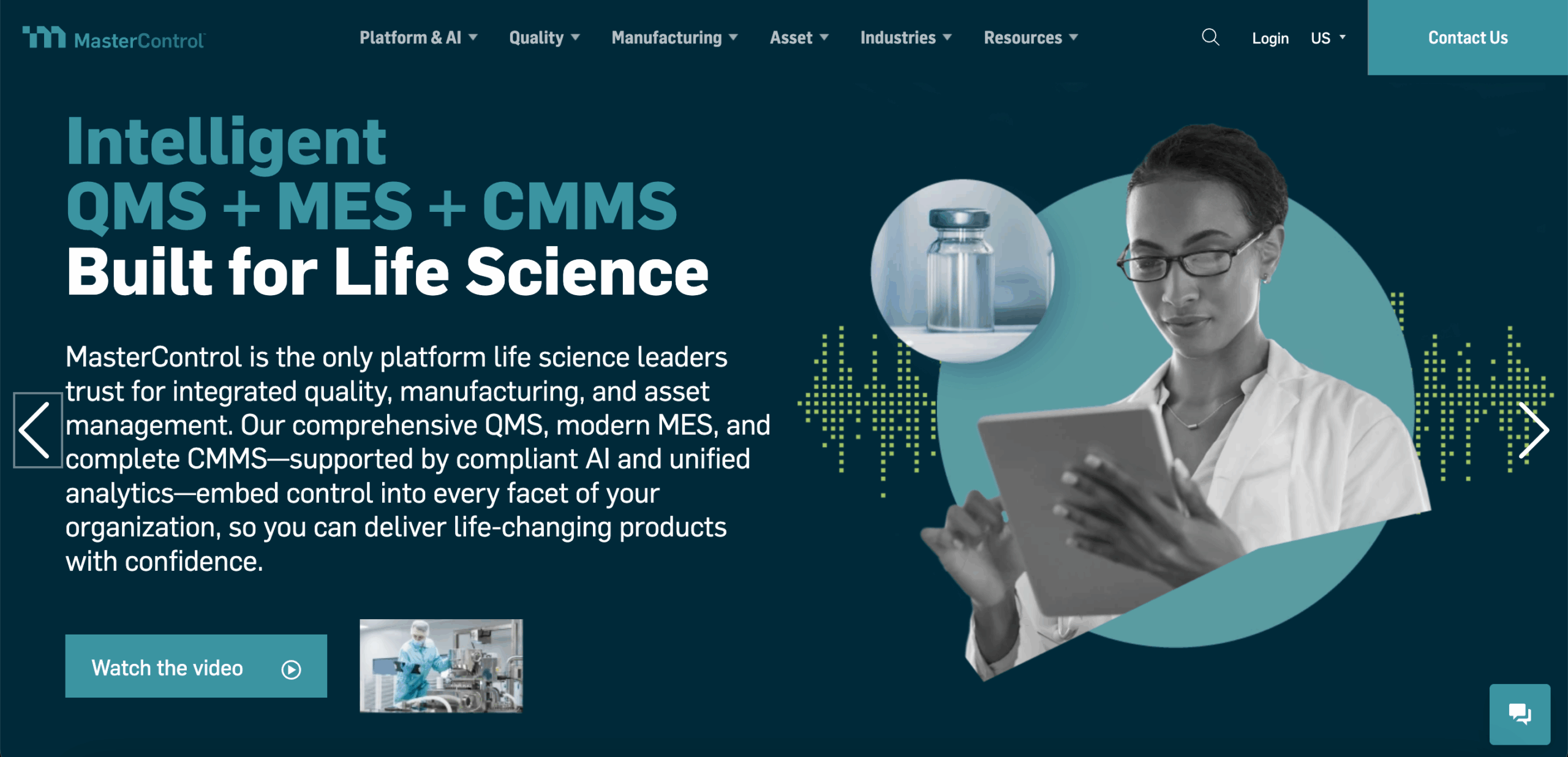
Image source: mastercontrol.com
MasterControl is a digital quality and manufacturing management system for regulated industries, including pharmaceuticals, medical devices, and life sciences.
Its paperless document management software replaces traditional systems. The connected platform manages documents, audits, training, and production data.
The software helps companies maintain compliance with the Food and Drug Administration (FDA) and International Organization for Standardization (ISO) standards.
It automates document routing, approvals, and version control to reduce manual effort and improve accuracy.
Key Features
- Centralized control of documents, training, and quality data
- Automated routing, approval, and version tracking
- Electronic batch record (EBR) and device history record (DHR) modules
- Integrated audit, risk, and training management
- Configurable workflows for document and change control
- Recipe and variant management for production operations
- Real-time collaboration with permission-based access
- Dashboards and analytics for performance tracking
- AI-assisted document translation and summaries
Strengths and Limitations
MasterControl helps manufacturers manage compliance and quality effectively. It improves visibility across departments and reduces time spent on manual data entry.
The platform also supports regulatory alignment with health and safety standards while keeping documentation accurate.
Yet setup can be complex for larger organizations, and many users need additional training to use advanced modules.
Integrating MasterControl with other enterprise systems may require technical support, and data migration needs careful planning.
Some users mention that creating reports can be difficult without prior experience.
4. Greenlight Guru

Image source: greenlight.guru
Greenlight Guru is a digital quality management system for medical device manufacturers. It replaces paper-based tools with a connected platform that manages design controls, audits, and documentation.
The system includes a clinical data module that helps teams collect accurate information while meeting ISO and medical device regulation (MDR) requirements.
The software offers pre-validated templates and compliance tools that help companies set up studies quickly.
It maintains data integrity across the product lifecycle and connects design control, risk, corrective and preventive action (CAPA), and training modules in one system. This setup helps teams track progress and bring products to market faster.
Key Features
- Electronic case report form (eCRF) module with pre-validated templates for clinical studies
- Built-in ISO 14155:2020 and MDR compliance support
- Real-time dashboards for data access and monitoring
- Adverse event reporting and audit trail tracking
- Automated workflows for document reviews and approvals
- Secure cloud storage with permission-based access
- API integration with other business systems
Strengths and Limitations
Greenlight Guru helps medical device companies manage quality and compliance efficiently. It supports documentation control and audit preparation, giving teams better visibility across projects.
The system helps companies meet both regulatory and customer expectations.
Despite that, customization options are limited, and uploading documents can take time during implementation.
The lack of in-app editing requires users to download and re-upload files. Users also find the platform more suited to original equipment manufacturers than smaller service providers.
5. SimplerQMS
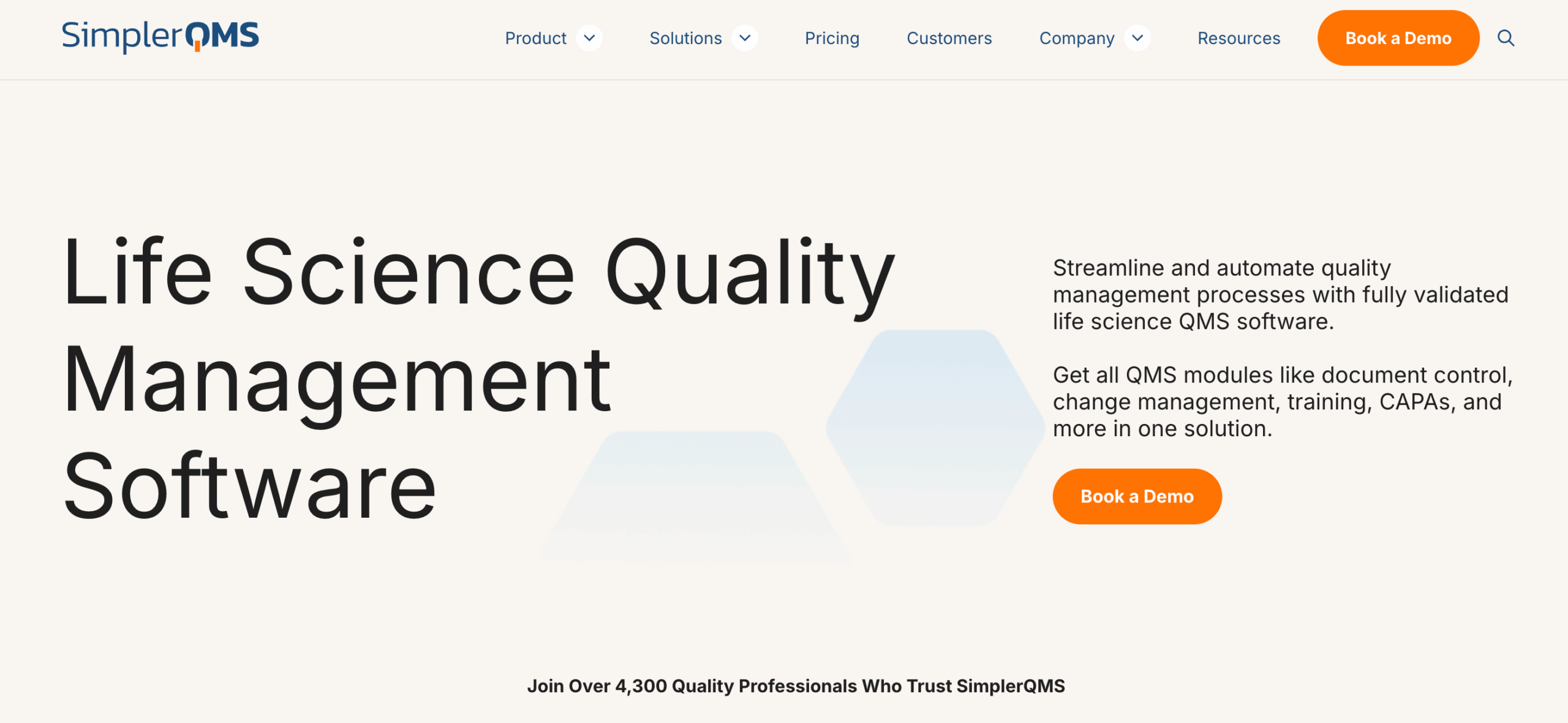
Image source: simplerqms.com
SimplerQMS is a cloud-based quality management system for life science companies. It replaces paper records with a digital platform that manages documents, training, audits, and change control.
Users create and approve documents through built-in templates and automated workflows. The system tracks progress, identifies delays, and sends alerts when actions are required.
Teams can schedule reviews to keep records accurate and compliant. Access permissions control who can view or approve documents, protecting sensitive information.
SimplerQMS connects document management with training and other quality modules. It integrates with Microsoft Office 365 and SharePoint Online so users can edit and save files in familiar applications.
Key Features
- Automated workflows for document review and approval
- Time-stamped audit trails and electronic signatures
- Role-based permissions for document access
- Integration of document, training, and change management
- Templates that support regulatory compliance
- CAPA, audit, risk, and complaint management modules
- Scheduling for document review and reapproval
- Cloud storage for centralized record access
- Continuous validation that meets industry standards
Strengths and Limitations
SimplerQMS helps life science companies manage compliance and documentation in one system.
It provides clear oversight of document status and ensures records stay consistent with regulatory standards.
On the other hand, implementation can take time, and users may need help during setup. The lack of an Excel export feature limits reporting flexibility, and users find property lists in templates difficult to navigate.
Manage Every Quality Record in One Paperless Platform With TLM

Quality management shouldn’t depend on binders, spreadsheets, or disconnected systems. Teams need a solution that handles every record, approval, and audit from one place. That’s where TLM stands out.
Most QMS tools focus mainly on digital storage. TLM goes further by connecting document records with purchasing, supplier tracking, and inspections.
This structure gives companies a clear view of their quality operations and supports consistent, verified data across every step.
TLM fits naturally into daily work. Managers can review progress in real time, employees can complete approvals easily, and auditors can find the records they need without searching through multiple systems.
Each task links directly to the related document, so information stays accurate and traceable.
If your goal is to replace paper files with a connected quality system that improves visibility and audit readiness, TLM delivers that framework.
FAQs About Paperless QMS Software
What is paperless QMS software?
Paperless QMS software is a digital platform that replaces paper-based quality systems. It manages documents, approvals, training, and audits in one place.
The system helps companies maintain accurate records, meet compliance requirements, and give teams quick access to quality information.
How does a paperless QMS improve audit readiness?
A paperless QMS keeps all records organized and easy to locate. Auditors can access files, approvals, and version histories within seconds.
This setup shortens audit preparation time and helps teams demonstrate compliance with complete accuracy.
What is the best paperless QMS software?
The best paperless QMS software depends on your company’s goals and industry. TLM stands out for its connected structure that links documents, supplier records, and training in one system.
It helps teams manage quality, maintain compliance, and stay ready for audits.