
International Organization for Standardization (ISO) audits fail for common reasons. Evidence spreads across systems, corrective actions stall, and audit status stays unclear until deadlines approach.
ISO audit software addresses those gaps. It tracks audit plans, findings, evidence, and corrective actions so nothing gets missed.
You can see which ISO clauses pass, which don’t, and what still needs review.
This guide covers the best ISO audit software solutions for 2026 and explains how each tool helps quality leaders stay audit-ready.
TL;DR
These are the best ISO audit software tools to use in 2026:
- TLM
- SafetyCulture
- Vanta
- GoAudits
- ISMS
- AuditBoard
What Is ISO Audit Software?
ISO audit software keeps your audits in one system. Auditors log findings by ISO clause during internal and external audits.
Process owners attach evidence directly to each finding. Corrective actions stay linked to the audit, which helps maintain compliance and close gaps before the next review.
At any point, you can check compliance status, review audit trails, and confirm which actions remain open. That makes internal audits easier to run and certification audits far less stressful.
Top 6 ISO Audit Software Solutions for 2026
ISO audit software tools serve different purposes. Some handle checklists. Others focus on reports.
The most useful platforms support the full ISO audit process, from planning audits to closing corrective actions.
Here are the leading ISO audit software options for 2026.
1. TLM
Total Lean Management (TLM) is audit management software that runs recurring ISO compliance audits across multiple standards and locations.
TLM supports ISO and industry standards, including ISO 9001, ISO 13485, ISO 14001, ISO 17025, AS 9100, IATF 16949, HACCP, and SQF Food Safety.
Organizations use it to manage audits for one standard or several at the same time within a single system.
The platform replaces manual compliance tracking with one audit management system that covers the entire audit lifecycle.
Audits, evidence, corrective actions, and reports stay connected, which reduces human error and keeps compliance work visible between audits.
How TLM Supports the ISO Audit Process
TLM organizes audit procedures around ISO standards and regulatory requirements.
Quality teams schedule audits by standard, process, or risk level. Auditors record audit findings directly against ISO clauses.
Each clause links to controlled procedures and supporting documents, which keep evidence on par with audit requirements.
The system supports internal and external audits and maintains audit trails for certification and surveillance reviews.
Key Features
- Clause-based audits aligned with ISO standards
- Risk-based audit depth supported by risk assessments
- Centralized document management with version-controlled document control
- Compliance monitoring with real-time tracking by standard and location
- Audit findings linked directly to CAPA and compliance workflows
- Built-in audit templates for major ISO and industry standards
- Supplier audits with configurable scoring
- Multi-location audit management for medium-sized businesses and large enterprises
- Custom audit forms with approval workflows and automated reminders
- AI-powered compliance reviews and document content searching
Reporting and Audit Visibility
TLM handles report generation directly from audit records. Quality teams stop rebuilding reports from spreadsheets, emails, and paper files.
Dashboards show compliance status, open findings, overdue actions, and upcoming audits in real time. Leadership reviews audit readiness without waiting for status updates.
Use in Highly Regulated Industries
TLM supports organizations that operate under strict regulatory compliance requirements, including medical devices, automotive, laboratories, and food safety.
These environments rely on accurate audit management, controlled document management, and reliable audit workflows to meet ISO standards.
TLM supports both on-premises and cloud deployments and protects sensitive customer data through role-based access controls.
2. SafetyCulture
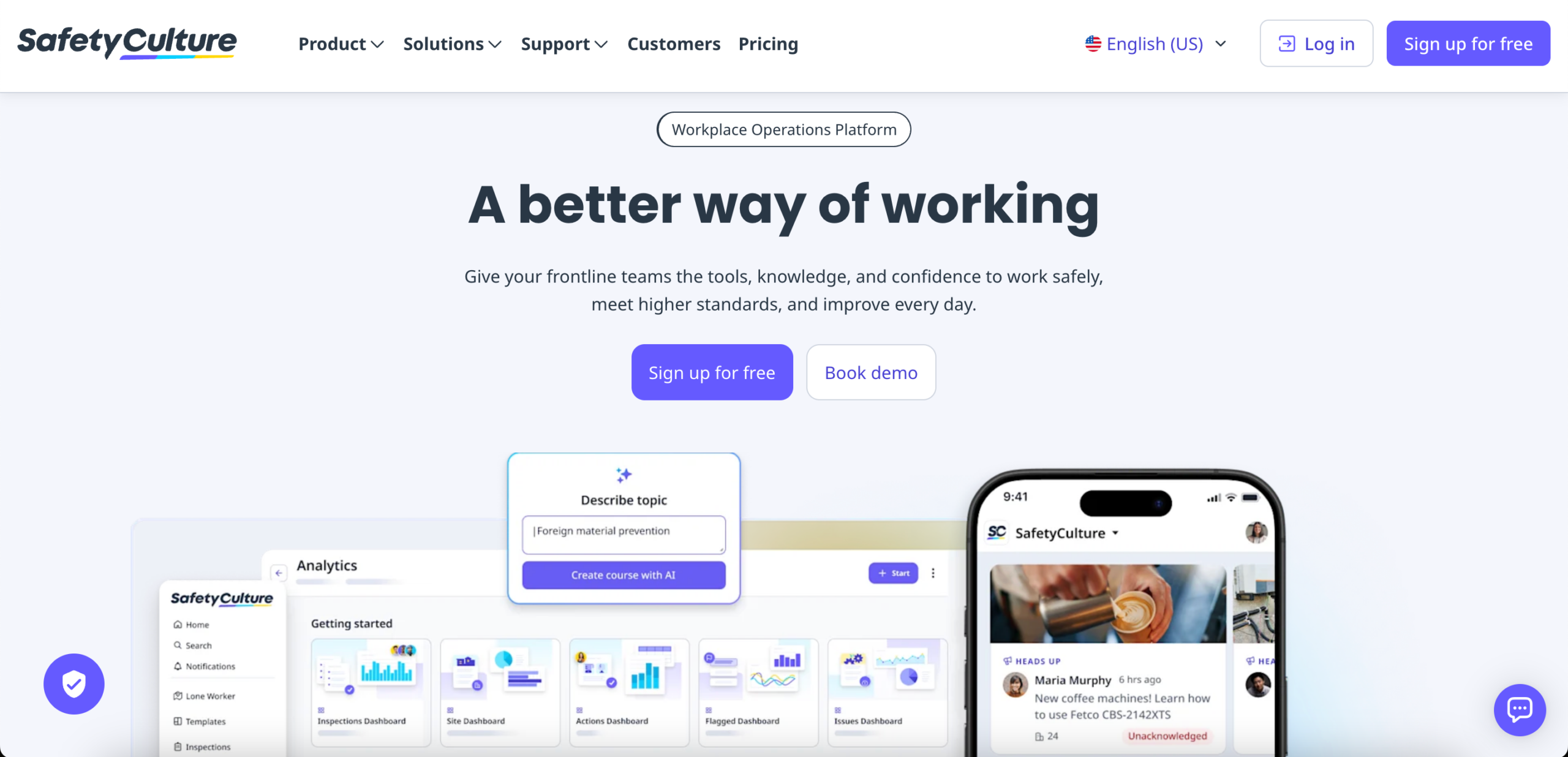
Image source: safetyculture.com
SafetyCulture is used to run inspections, safety audits, and basic ISO audits with digital checklists. Organizations use it to replace paper forms and reduce manual tasks during field audits.
The platform runs as a cloud-based platform with a mobile focus. It supports ISO related audits but relies on checklist execution rather than clause-level audit management.
How ISO Audits Work in SafetyCulture
Auditors complete ISO audits using predefined or custom checklists. They capture photos, notes, and responses during the audit.
Findings create compliance tasks with assigned owners and due dates. Automated workflows and alerts keep actions visible after the audit. Real-time monitoring shows audit progress and open items.
Key Features
- Digital checklists for compliance audits
- Audit scheduling for recurring audits and new audits
- Automated evidence collection through photos and form inputs
- Corrective action tracking tied to checklist findings
- Risk assessments and basic risk analysis
- Automated compliance reports from completed audits
- Dashboards with data analytics and trend views
- Integrations with other systems to limit duplicate manual tasks
Strengths and Limitations
SafetyCulture supports fast audits and easy data capture, especially in the field. The user-friendly interface helps reduce errors during inspections and audits.
At the same time, the platform offers limited support for structured ISO audit management. It doesn’t manage audit findings by ISO clause or support detailed document control.
Reporting options remain basic, and offline syncing can cause issues with photos and records. Organizations with complex ISO compliance needs often pair SafetyCulture with other systems.
3. Vanta
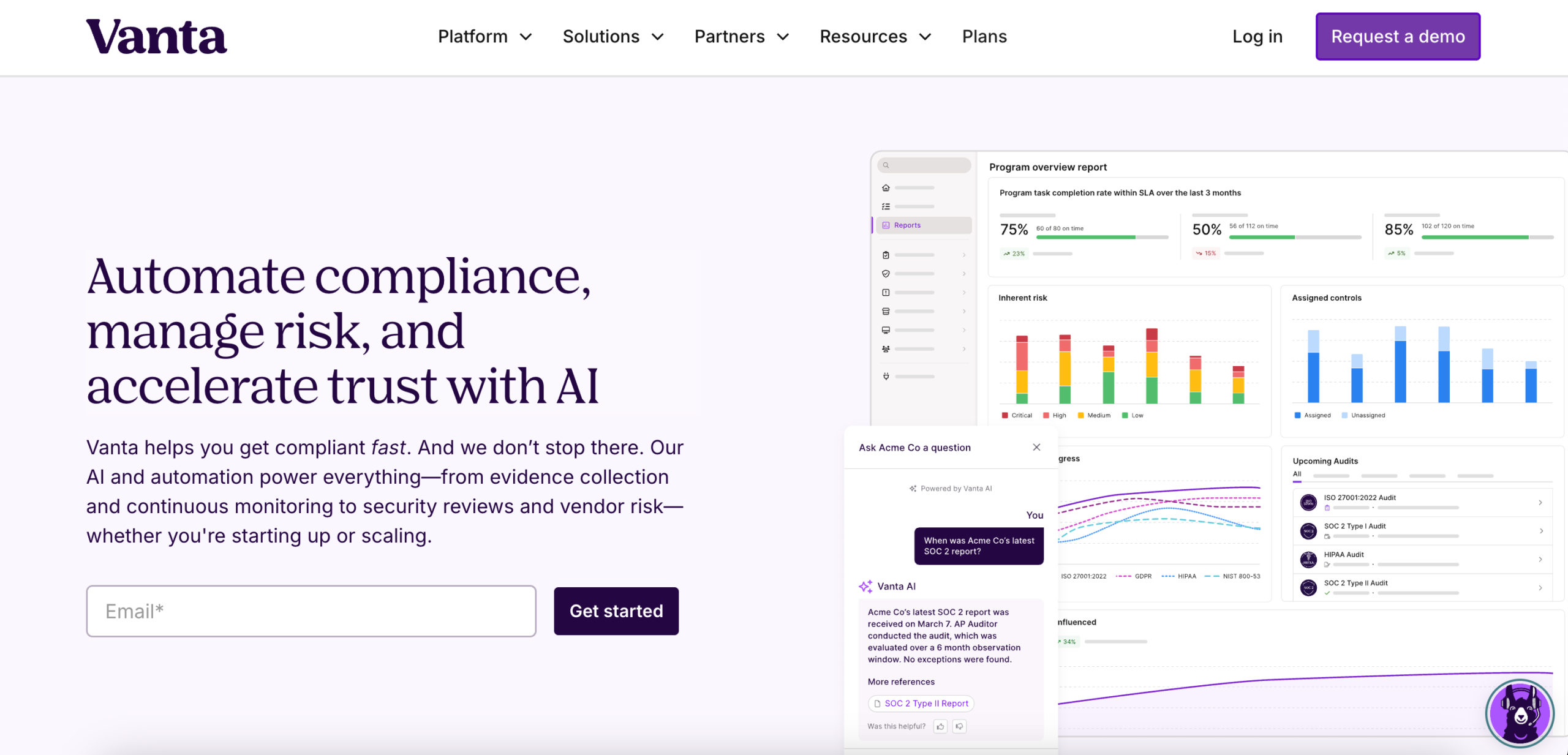
Image source: vanta.com
Vanta is compliance audit software focused on security standards. Organizations use it to manage audits that rely on technical controls, system access, and configuration data.
The platform runs in the cloud and centers on automation. It connects to common SaaS tools to collect evidence, which reduces the manual effort usually required during security audits.
How ISO Audits Work in Vanta
Vanta handles ISO audits through automated control checks and ongoing evidence collection. The system monitors controls in real time and updates the audit status as evidence comes in.
Auditors can review selected data directly in the platform, comment on evidence, and track requests without long email chains.
ISO 27001 audits move smoothly when requirements match standard controls. Audits that involve custom controls or non-standard workflows often require manual steps outside the automated process.
Key Features
- Automated evidence collection from connected systems
- Continuous monitoring of security controls
- Audit scheduling and evidence status tracking
- Auditor collaboration through shared access and comments
- Risk assessments focused on information security
- Audit report generation based on collected evidence
Strengths and Limitations
Vanta reduces manual work during security audits and surfaces potential risks early through real-time monitoring. It’s useful for organizations that follow common security frameworks.
However, the platform only prioritizes standardized security frameworks. Organizations with complex or highly customized compliance requirements may need manual workarounds.
4. GoAudits
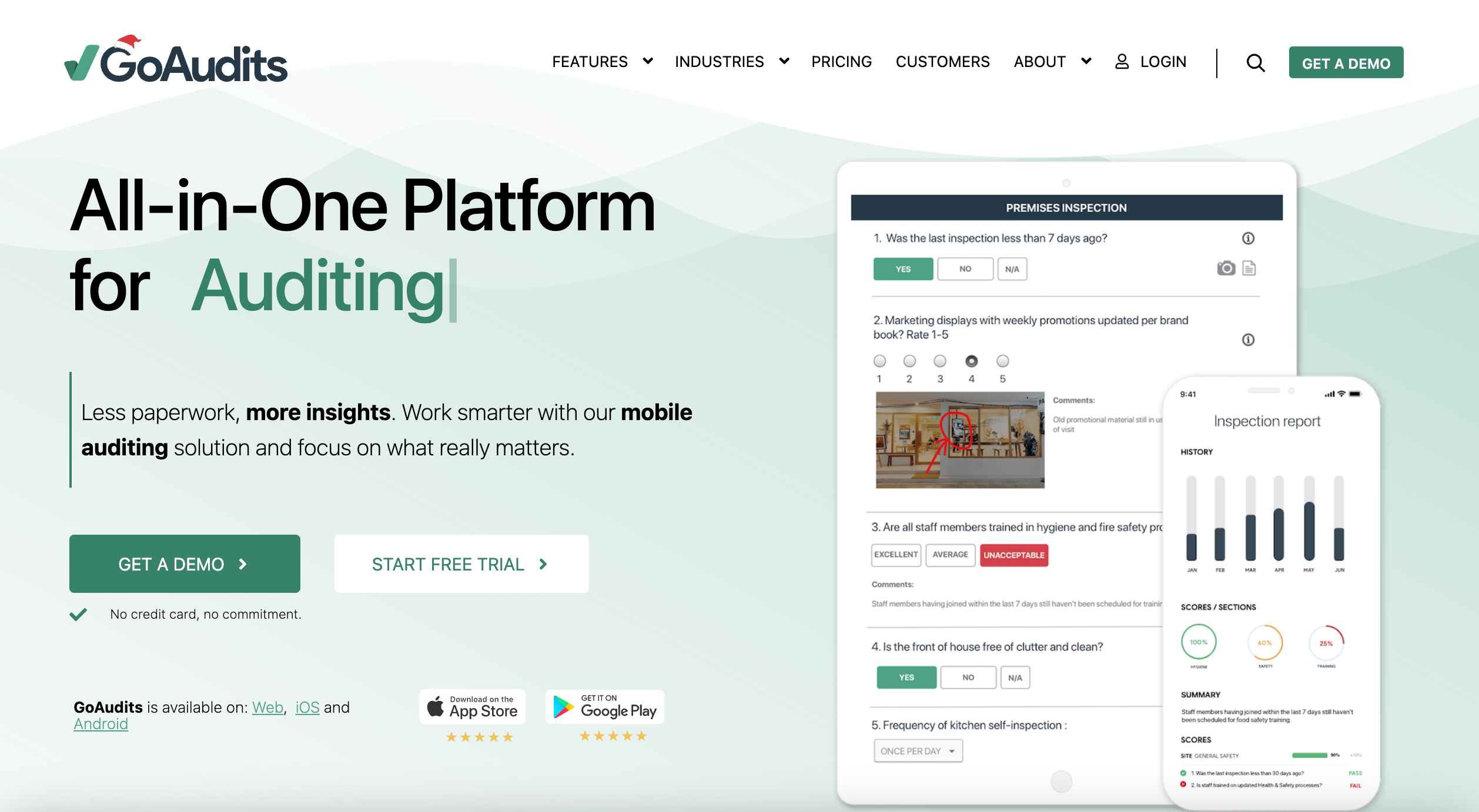
Image source: goaudits.com
GoAudits is an audit and inspection software tool used for mobile inspections and repeatable field audits.
Organizations use it to replace paper checklists with digital forms that work on phones, tablets, and computers, even offline.
The platform supports ISO-related audits at an operational level. It focuses on how audits get completed in the field rather than full ISO audit management across regulatory frameworks.
How ISO Audits Work in GoAudits
GoAudits runs audits through mobile checklists.
Auditors complete forms, attach photos, add notes, and collect signatures during inspections. Once devices reconnect, the system syncs data and generates reports automatically.
Audit results can trigger follow-up actions with owners and due dates. Dashboards show audit progress and completion status across locations.
Key Features
- Mobile audits on iOS, Android, and web
- Offline audit execution with later sync
- Custom digital checklists with logic-based fields
- Photo capture, timestamps, and e-signatures
- Automatic scoring and instant report generation
- Audit scheduling and assignment
- Corrective actions with reminders
- Dashboards with basic data analysis
Strengths and Limitations
GoAudits supports quick audit execution and fast report turnaround, especially for field inspections. Mobile access and offline capability help auditors complete inspections on time.
On the other hand, the platform centers on inspections rather than structured ISO audit management.
It doesn’t track findings by ISO clause or support document control for quality management systems.
Integrations remain limited, and users report mobile app issues during early use. Organizations with formal ISO audit requirements often pair GoAudits with other systems.
5. ISMS
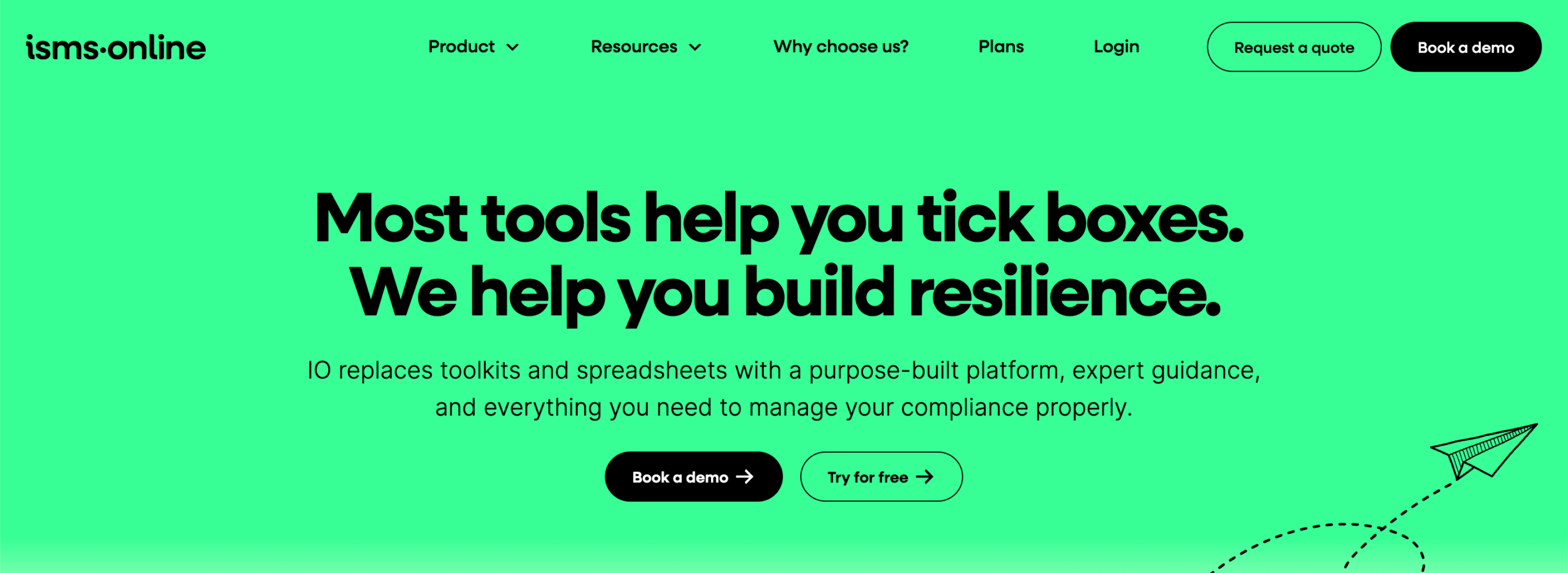
Image source: isms.online
ISMS is a compliance audit platform focused on information security management.
Organizations use it primarily to manage security policies, risk registers, control ownership, and audit evidence in accordance with ISO 27001.
The platform supports ongoing compliance management rather than one-off audits. This is helpful for SaaS companies that treat ISO 27001 as a continuous security program.
How ISO Audits Work in ISMS
ISMS supports ISO audits through documentation and risk management. Users document assets, risks, controls, and control owners inside the platform. Each control links to supporting policies and evidence.
Auditors review these records to confirm how risks were identified, how controls address those risks, and how changes get tracked over time.
The Statement of Applicability stays active inside the system. It updates as controls change and exports directly for auditors.
Audit preparation focuses on validating documentation and risk treatment rather than conducting checklist-based inspections.
Key Features
- Central storage for policies, risks, controls, and evidence
- Living Statement of Applicability for ISO 27001
- Risk registers and treatment plans with scheduled reviews
- Policy publishing with read and acknowledged tracking
- ISMS overview showing links across risks and controls
- KPI tracking for ongoing reviews
- Exportable records for audits
- Integrations with existing tools
Strengths and Limitations
ISMS is suitable for organizations that need to document and maintain an ISO 27001 information security management system.
Auditors can review policies, risks, controls, and evidence directly, which reduces follow-up questions during audits.
That said, the platform focuses on information security only. It doesn’t support operational audits, clause-based ISO 9001 audits, or quality management workflows.
Organizations that audit manufacturing processes, suppliers, or operational controls often use additional audit software alongside ISMS.
6. AuditBoard
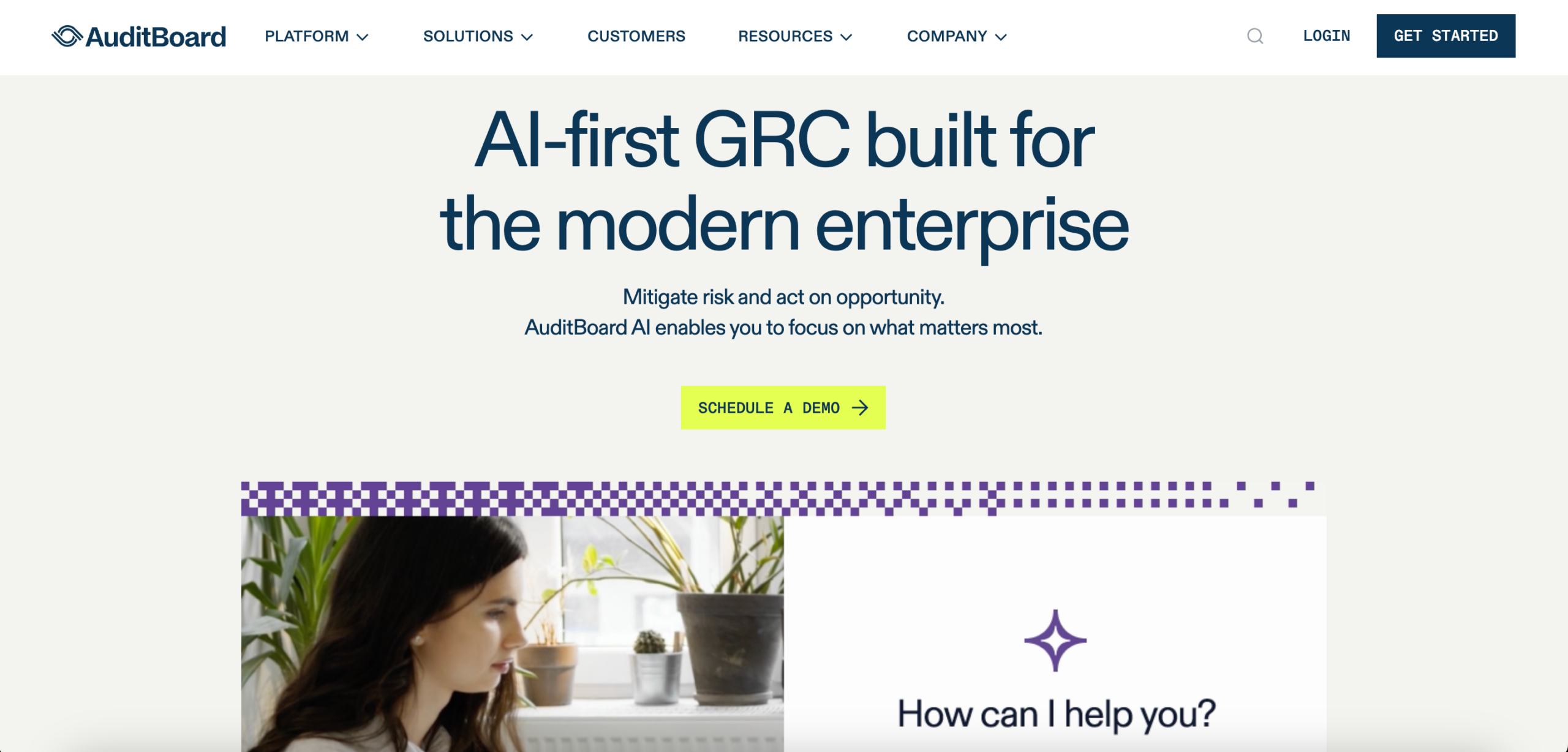
Image source: auditboard.com
AuditBoard is an audit, risk, and compliance platform used by organizations that manage several audit programs at once.
It’s common in environments where ISO audits run alongside IT audits and vendor reviews.
The platform replaces separate tools for audit planning, evidence tracking, and issue management.
Audit plans, test results, evidence, and open issues live in one system instead of across emails and spreadsheets.
How ISO Audits Work in AuditBoard
AuditBoard treats ISO audits as part of a broader audit program.
Auditors plan audits based on risk and assign fieldwork through the platform. Controls get tested through questionnaires, with evidence attached to each step.
When a control fails, the issue stays linked to that control until it closes.
When the same control applies to multiple frameworks, AuditBoard reuses the evidence. That avoids repeated document requests and keeps audit records consistent.
Key Features
- Risk-based audit planning and control testing
- Evidence attached directly to audit steps
- Issue tracking linked to failed controls
- Evidence reuse across audits and frameworks
- Regulatory change alerts tied to affected controls
- Dashboards showing audit status and open issues
- AI-assisted summaries for audit reports
Strengths and Limitations
When audits share controls and evidence, AuditBoard keeps those records in one place. Auditors reuse existing documents rather than request the same files again.
That said, the platform requires setup and training. The amount of structure can slow down daily work for organizations that only run ISO internal audits.
Replace Email-Based ISO Follow-Ups With TLM

ISO audits become difficult to manage when audit work spreads across tools that weren’t built to work together. Findings go into one system, evidence ends up somewhere else, and follow-ups rely on reminders instead of records.
When the next audit comes around, someone has to piece everything back together.
The software in this guide handles audits in different ways. Some help with inspections. Others focus on security or enterprise risk. That works in certain cases, but it doesn’t always line up with how recurring ISO audits actually run across standards and locations.
TLM comes into the picture when audits need continuity. Findings don’t disappear after one audit, and follow-ups stay visible. Audit history also carries over instead of resetting each cycle.
That continuity matters in regulated industries where audits influence certification status and customer expectations.
Medical devices, manufacturing, automotive operations, and laboratories depend on audit records that remain usable across review cycles.
FAQs About ISO Audit Software
What is an ISO audit program?
An ISO audit program sets a plan for internal and external audits against ISO standards. It defines audit scope, timing, ownership, and how findings are closed.
A well-run program keeps audit history consistent across cycles instead of restarting each year.
What is the most popular audit software?
There isn’t one audit tool used everywhere. Some organizations rely on inspection or security tools for part of the process, while others use audit management software to handle recurring ISO audits.
Platforms like TLM combine automation with clause-based audits and real-time insights, which help organizations keep findings visible across audit cycles.
How much does an ISO audit cost?
ISO audit costs vary by company size, industry, and standard. Fees usually include the certification body, preparation time, and follow-up work after findings.
Using the right software can reduce repeat preparation work and rework from a previous version of the audit.