


Data privacy laws are tightening, and businesses face growing pressure to stay compliant. Miss a requirement, and the penalties can be steep.
Compliance management software solves that problem. It helps teams stay organized, automates audits and documentation, and keeps proof ready when regulators ask for it.
This guide explains what makes compliance software effective and how to choose a solution that protects your business while keeping compliance simple.
What Is Compliance Management Software?
Compliance management software helps your company meet regulatory requirements and follow internal policies.
It functions as a centralized platform where you track compliance status, manage audits, and store important records.
You can keep all compliance documents, policies, and evidence in one secure place. The software assigns tasks, automates workflows, and maintains audit trails so you can prove compliance at any time.
It also identifies risks early and provides clear visibility into your compliance activities. With real-time monitoring and reporting, you’ll reduce manual effort and stay ready for any regulatory review.
7 Best Compliance Management Software Options in 2026
Different compliance software platforms serve different types of organizations. Some specialize in risk management and data privacy, while others provide full compliance management systems.
Below are seven leading options to consider for your compliance program.
1. TLM
Total Lean Management (TLM) helps organizations meet complex regulatory compliance requirements. It combines a feature-rich desktop app with a web app that’s simple and intuitive for all users.
Whether you deploy it on-premise or in the cloud, TLM keeps your compliance workflows aligned with daily operations. You’ll stay audit-ready, organized, and efficient across every department.
TLM supports compliance officers and teams with tools that simplify every part of the compliance lifecycle.
It brings compliance tracking, risk management, and audit preparation into one centralized platform.
Key Features
- Dual-platform setup: The desktop app manages complex compliance workflows. The web app allows employees to complete daily tasks quickly.
- Customizable settings: You can customize modules, fields, and layouts to match your organization’s structure.
- Automated alerts and tracking: TLM monitors deadlines, tasks, and compliance obligations to help you meet legal requirements on time.
- Templates and checklists: It includes preloaded International Organization for Standardization (ISO) procedures and compliance checklists that simplify audit preparation.
- Integration capabilities: The software connects with enterprise resource planning (ERP) systems, QuickBooks, and Zoho in one centralized library.
- Custom Forms: Build your own Custom Forms with email notification and approvals
- AI-Powered: AI-Powered compliance reviews and document content searching
Industry Applications
TLM serves multiple industries with strict compliance regulations.
- Medical devices: Supports quality management systems (QMS) for medical devices and Food and Drug Administration (FDA) 21 Code of Federal Regulations (CFR) Part 11 compliance. Teams can manage design history, product validation, and risk assessments.
- Manufacturing and services: Aligns with ISO 9001 to automate audit management and improve quality control.
- Automotive: Assists with automotive quality management compliance. This includes failure mode and effects analysis (FMEA), production part approval process (PPAP), and supplier oversight for third-party risk assessment.
- Food safety: Meets hazard analysis and critical control points (HACCP) and ISO 22000 standards with real-time monitoring and centralized documentation.
- Insurance and finance: Supports financial institutions with case management, audit trails, and reporting tools that improve accountability.
Security and Implementation
TLM includes multi-factor authentication, secure U.S.-based hosting, and Cybersecurity Maturity Model Certification (CMMC) Level 2 compliance.
You can deploy it in the cloud or on-site without losing functionality or speed. Its scalable design supports small teams and large enterprises while maintaining business continuity.
Results You Can Expect From TLM
TLM shortens audit cycles and improves accountability across your compliance program. Reports give leaders a precise view of compliance status, helping them act on gaps before they affect operations.
You’ll cut the time spent on documentation and avoid delays that stall certifications or audits. The system keeps compliance consistent, measurable, and aligned with business goals.
2. MetricStream
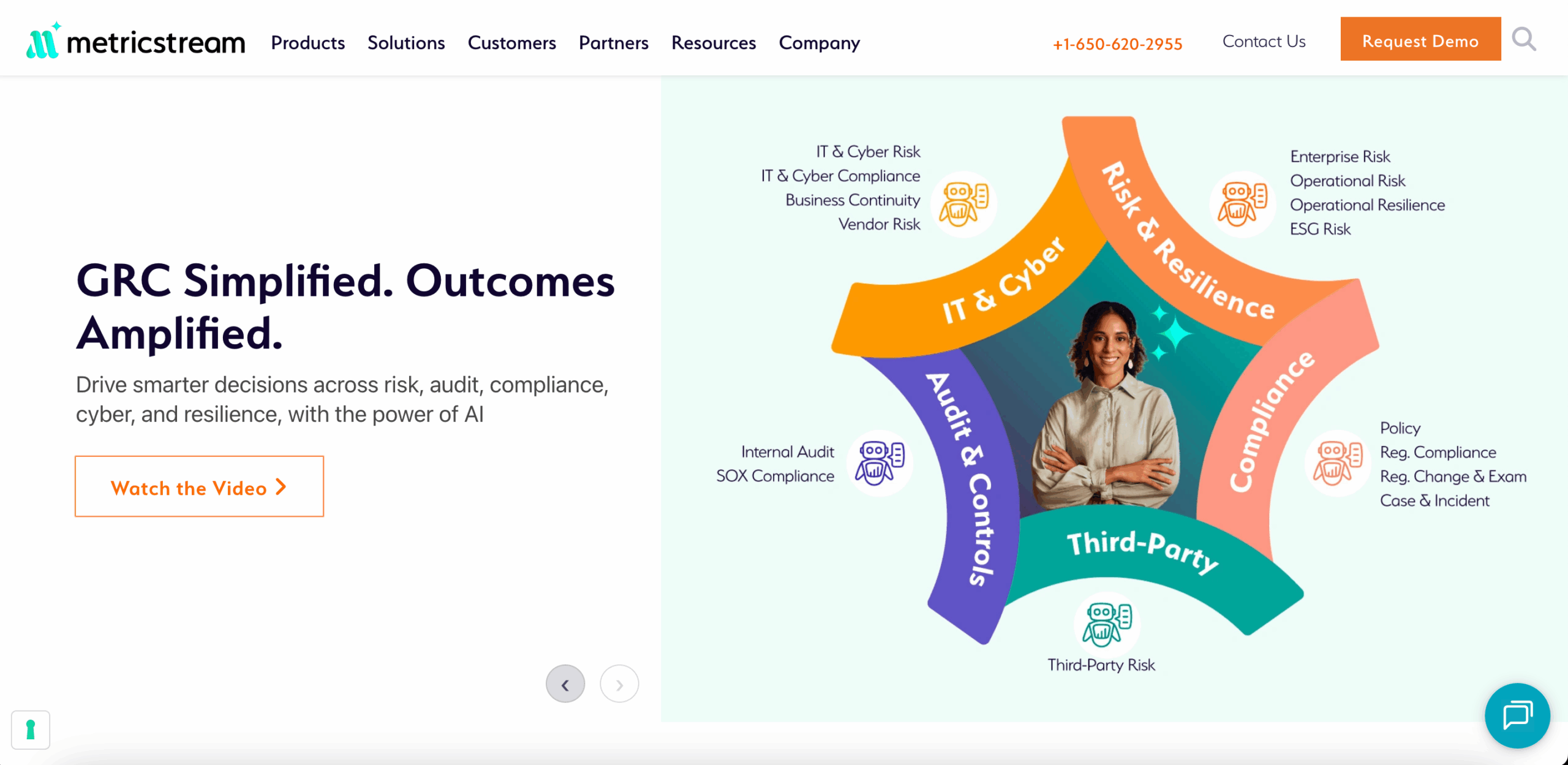
Image source: metricstream.com
MetricStream is a governance, risk, and compliance (GRC) platform for organizations that manage complex regulatory requirements.
It combines risk management, compliance processes, and audits into one cloud-based system.
The platform helps organizations improve visibility, reduce manual tasks, and maintain steady compliance monitoring.
MetricStream is widely used across industries with strict compliance demands. Financial institutions rely on it to manage enterprise risk programs and avoid regulatory penalties.
Healthcare organizations use it to meet data protection and patient safety standards.
Manufacturers depend on it for supplier and product compliance with ISO requirements, while technology companies apply it to manage security risks.
Key Features
- AI-driven risk insights: AI and machine learning identify control gaps and improve compliance risk management.
- Regulatory change management: The software captures new regulations automatically and links them to internal controls, policies, and processes.
- Continuous monitoring: It tracks compliance performance and risk exposure in real time through dashboards and data visualization tools.
- Audit and Sarbanes–Oxley Act (SOX) compliance: AI streamlines fieldwork, improves control testing, and reduces the effort needed to demonstrate compliance.
- Third-party oversight: It manages vendor risks through automated onboarding, assessments, and ongoing monitoring.
- Centralized policy management: The system maintains a single repository for policies, regulations, and control frameworks. This helps improve corporate governance and coordination across departments.
Strengths and Limitations
MetricStream provides dependable automation and structured workflows that make governance, risk, and compliance management more efficient.
It helps large organizations maintain transparency and accountability across compliance programs.
However, some users note that the interface can feel rigid and may take time to learn. Managing large datasets or applying system updates can also affect performance.
3. NAVEX
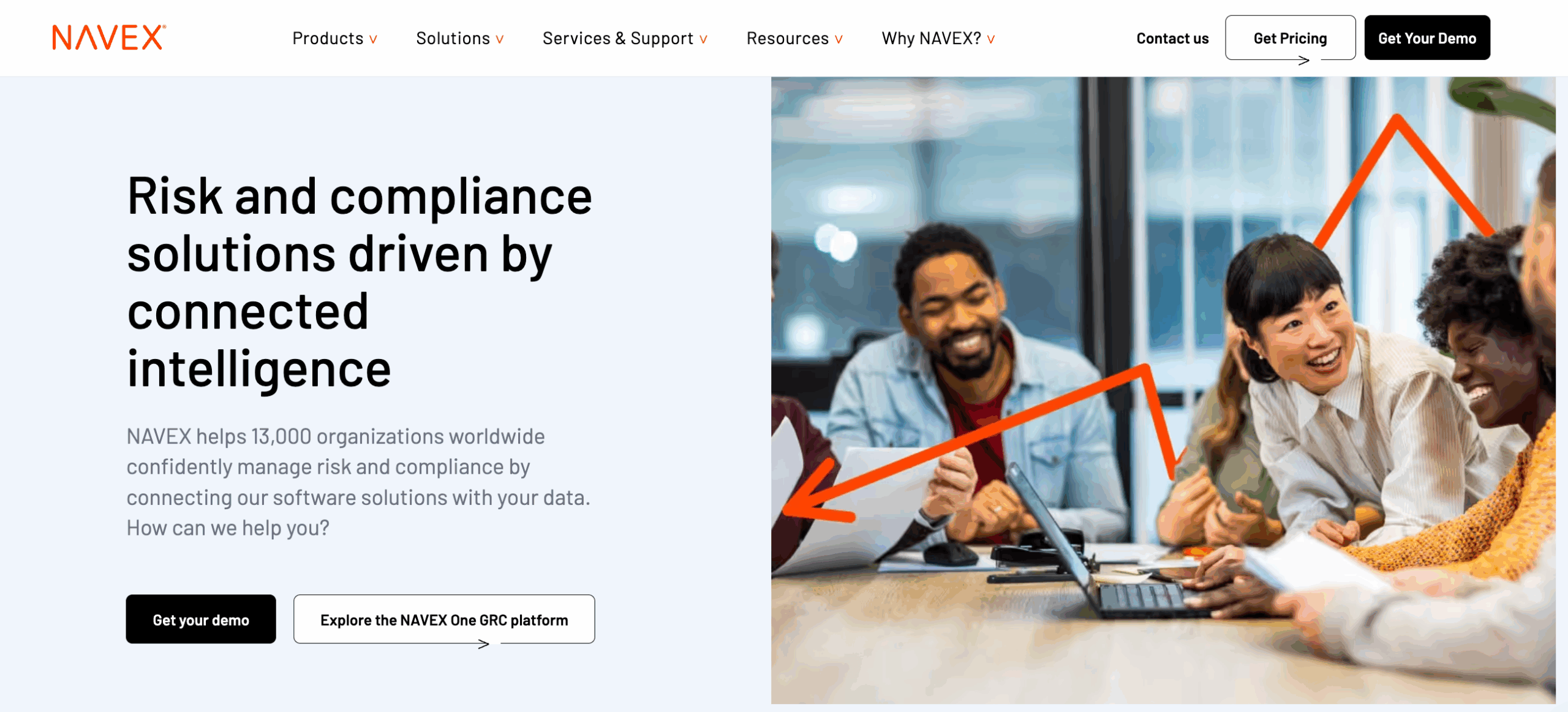
Image source: navex.com
NAVEX is a GRC platform that unifies policy management, training, reporting, and risk oversight in one system.
It helps organizations manage compliance efforts, reduce manual work, and address regulatory risks with automation and clear insights.
NAVEX serves industries that operate under complex regulatory frameworks. Financial services use it to improve enterprise risk management and meet compliance obligations.
Healthcare organizations rely on it to manage data protection, patient safety, and ethical reporting.
Manufacturers, energy providers, and life sciences companies use it to comply with regulations and improve internal accountability.
Key Features
- AI-powered risk insights: Artificial intelligence supports proactive risk management by identifying compliance issues and control gaps before they escalate.
- Whistleblowing and incident management: Employees can report concerns confidentially. This helps organizations respond quickly and maintain transparency.
- Policy and procedure management: The software stores and distributes policies in one place so employees can access the latest versions when needed.
- Ethics and compliance training: Offers online courses in multiple languages tailored to specific roles and regional standards.
- Third-party compliance oversight: Tracks and assesses vendor relationships to reduce exposure to regulatory risks.
- NAVEX One compliance hub: Organizes employee tasks such as policy attestations, disclosures, and training in one central dashboard.
Strengths and Limitations
NAVEX helps organizations coordinate compliance programs across departments and manage them efficiently. It supports enterprise-wide visibility and simplifies complex compliance efforts.
Despite that, users report that the interface isn’t intuitive and can take weeks to learn. Others note that system navigation becomes slower when managing high volumes of compliance data.
4. Hyperproof
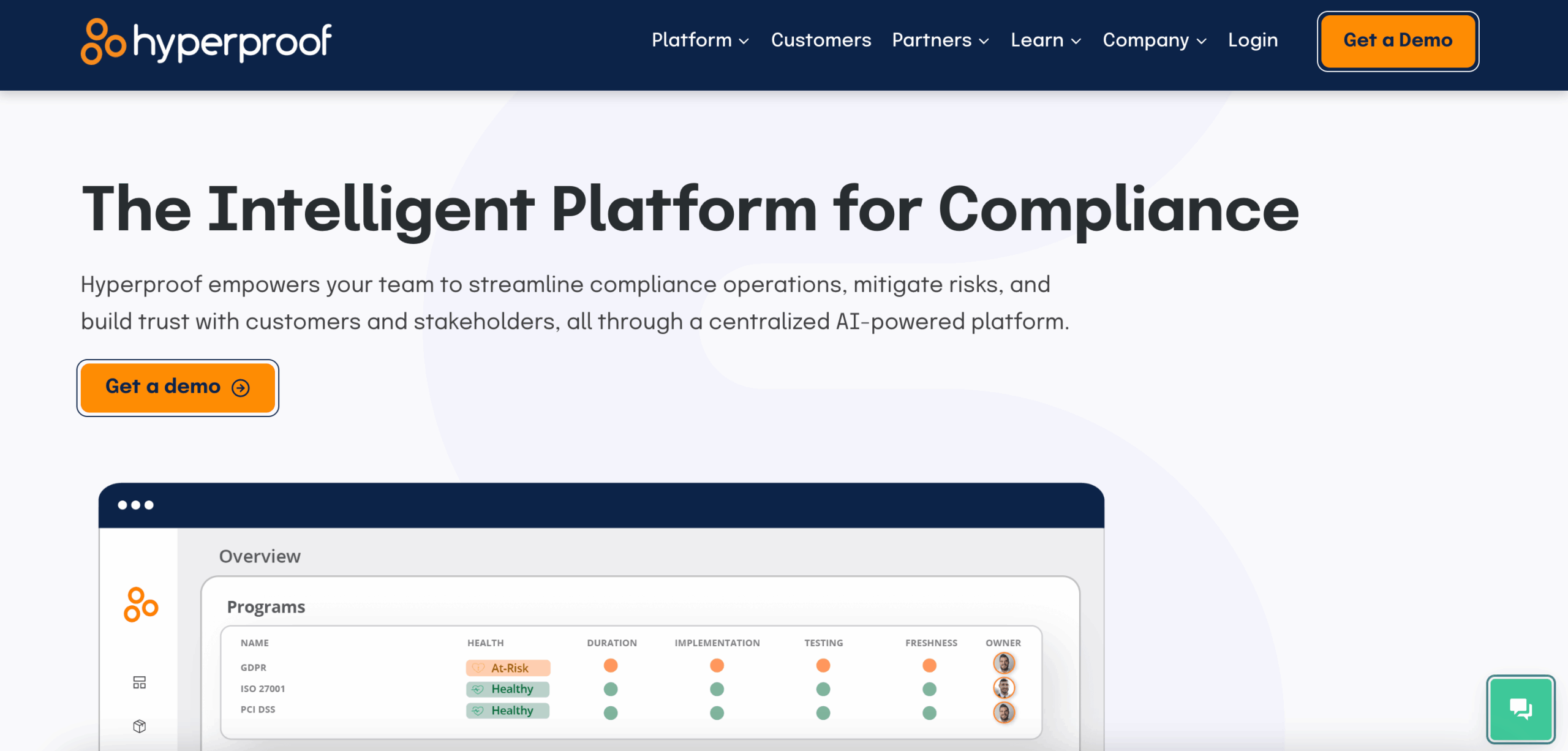
Image source: hyperproof.io
Hyperproof centralizes control management, audits, and risk data in one system. It enables organizations to streamline compliance operations and reduce manual work through automation.
The platform supports teams in tracking evidence, managing frameworks, and addressing compliance gaps across multiple departments.
Hyperproof is used across industries that manage complex frameworks and frequent regulatory updates. Financial institutions use it to standardize compliance workflows and improve risk oversight.
Healthcare organizations rely on it to organize audit documentation and maintain data security. Technology companies apply it to manage regulatory compliance programs across multiple products and regions.
Key Features
- Automated control management: Helps teams create, test, and maintain controls while minimizing repetitive work.
- Evidence collection and tracking: Automatically organizes audit evidence to keep records accurate and accessible.
- Audit collaboration: Offers a shared workspace for auditors and compliance teams to coordinate and track progress.
- Risk and issue management: Integrates control data with risk registers to identify and resolve compliance issues.
- Policy management: Maintains all company policies in one system, ensuring version control and easy employee access.
- Comprehensive reporting: Provides dashboards that present compliance status, control effectiveness, and risk trends.
Strengths and Limitations
Hyperproof improves compliance efficiency by automating evidence management and aligning controls across frameworks.
It enables organizations to support regulatory compliance programs while allowing teams to focus on strategic initiatives.
Still, users report that implementation can take time for complex environments and that reporting features offer limited customization.
Others mention that syncing with third-party systems can occasionally cause delays.
5. Enzuzo

Image source: enzuzo.com
Enzuzo helps businesses meet global data protection requirements under laws such as the General Data Protection Regulation (GDPR) and the California Consumer Privacy Act (CCPA).
With Enzuzo, you can manage consent, create legal policies, and handle data subject access requests (DSARs) without difficulty. The platform automates key privacy tasks so you can stay compliant without manual work.
Enzuzo serves industries that collect and process personal data, including e-commerce, software, and digital services.
It supports companies that need to comply with changing privacy regulations and maintain customer trust while reducing administrative effort.
Key Features
- Cookie consent management: Builds custom consent banners that comply with GDPR and CCPA requirements, so users can update their preferences anytime.
- Legal policy generation: Creates privacy policies, end-user license agreements (EULAs), and subscription terms based on templates drafted by legal experts.
- Data subject access request management: Tracks and completes DSARs from a single dashboard to help teams respond to user data requests quickly.
- Automated data discovery: Finds and classifies sensitive information to support audits and prevent compliance issues.
- Incident and breach management: Monitors potential data breaches and sends required notifications automatically.
- Compliance analytics: Displays consent logs and activity summaries in real time to provide proof of compliance.
Strengths and Limitations
Enzuzo simplifies privacy management by automating policy creation and consent tracking. It helps teams maintain updated privacy policies and manage workflows more effectively.
Although users find the platform helpful, some report limited customization and occasional performance lag. Others mention that the integration setup can take too much time.
6. ZenGRC
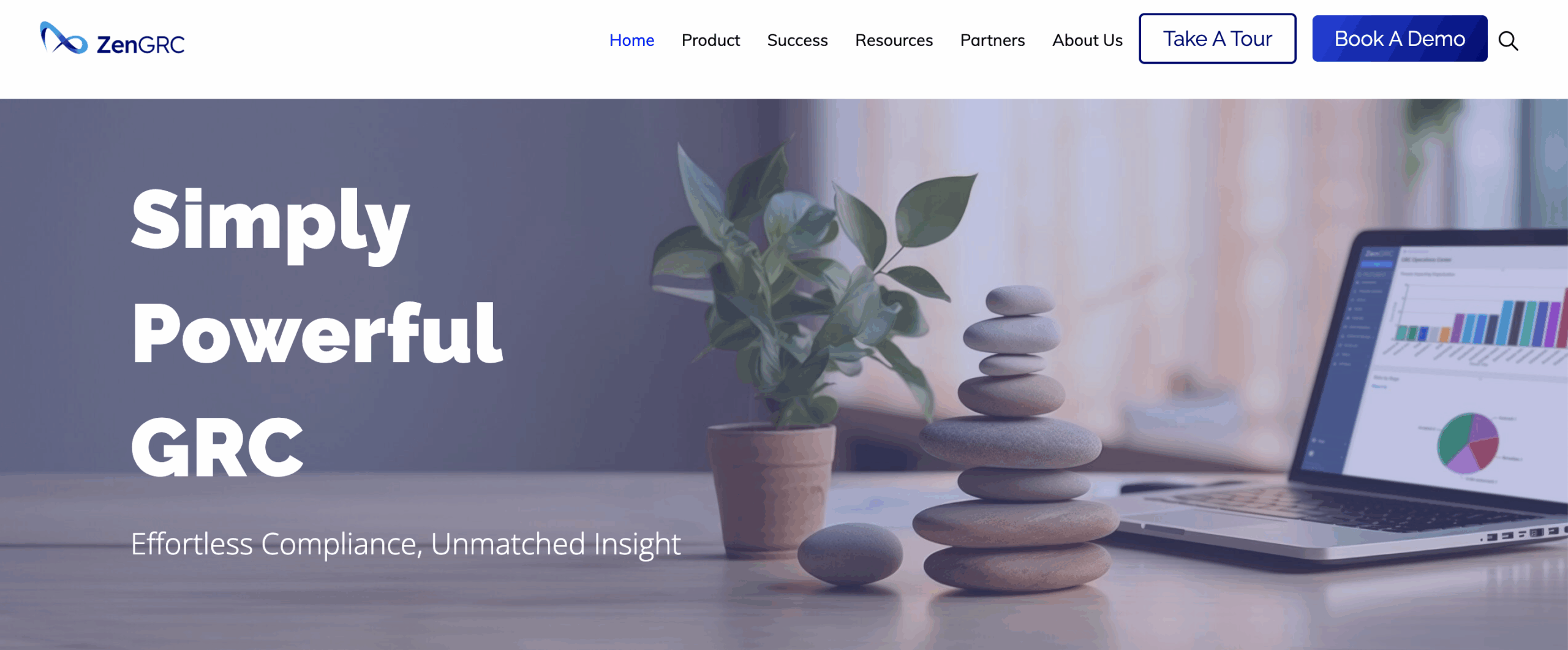
Image source: zengrc.com
ZenGRC simplifies compliance by automating evidence collection and tracking controls. The platform supports frameworks such as SOC 2, HIPAA, PCI DSS, and ISO.
Teams can store compliance data in one place, making it easier to stay organized and respond quickly to audits.
ZenGRC supports industries with complex compliance needs, including healthcare, financial services, manufacturing, and technology.
It helps organizations manage multiple frameworks at once and align compliance programs with overall business goals.
Key Features
- Audit management: Lets users create, monitor, and manage audits while assigning and tracking related tasks.
- Risk management: Identifies and evaluates risks with built-in scoring tools, heatmaps, and timelines.
- Vendor management: Assesses third-party risks using customized questionnaires and performance tracking.
- Evidence collection: Centralizes evidence and reuses documentation across multiple frameworks to reduce repetitive work.
- AI automation: Uses artificial intelligence to evaluate control effectiveness and generate assessment results based on stored evidence.
- Integrations: Connects with Jira, ServiceNow, Slack, Amazon Web Services (AWS), and Tableau to improve collaboration and data sharing.
Strengths and Limitations
ZenGRC helps teams manage risk and compliance in one structured platform. It reduces manual work and supports faster reporting.
However, users mention that the interface feels complicated and requires training to use efficiently.
Others note that missed notifications can delay task reviews, and adding an archive feature for completed items would make navigation smoother.
7. MasterControl
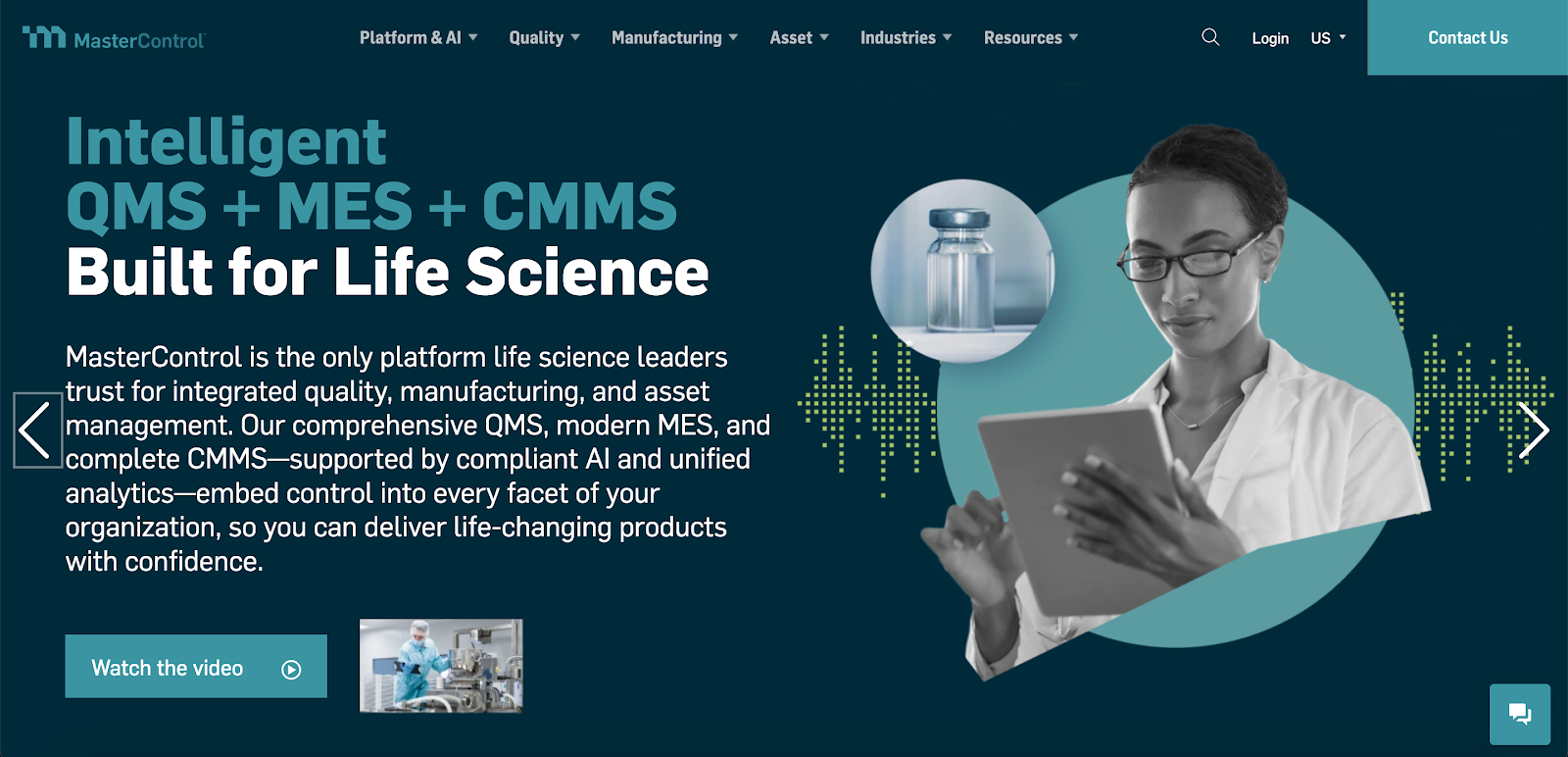
Image source: mastercontrol.com
MasterControl centralizes quality management, document control, and regulatory compliance in one integrated platform.
Companies use it to manage processes like corrective and preventive action (CAPA), audits, training, and change control while maintaining compliance with FDA and ISO standards.
MasterControl supports industries that face strict regulatory oversight. These include medical device manufacturing, pharmaceuticals, food and beverage production, government agencies, and ISO-certified manufacturing.
Each of these sectors relies on MasterControl to handle quality operations, manage audits, and maintain continuous compliance across global teams.
Key Features
- Audit management: Tracks internal and external audits with tools for scheduling, scoring, and root cause analysis.
- CAPA management: Records and resolves nonconformances to prevent repeat issues.
- Document control: Maintains version-controlled records and ensures compliance with U.S. 21 CFR Part 11 and ISO 13485.
- Training management: Automates employee training linked to updated procedures and policies.
- Reporting tools: Provides trend analysis, metrics, and compliance surveillance data for ongoing quality oversight.
- Integrations: Connects with enterprise systems to unify documentation and streamline operations.
Strengths and Limitations
MasterControl keeps compliance consistent across departments. It’s effective for companies managing complex regulatory environments and frequent audits.
Even so, new users report that the interface feels outdated and less intuitive. Customization often requires vendor involvement, and print controls for paper-based documentation can slow down processes.
How to Choose the Best Compliance Management Software
Choosing the right compliance management system starts with understanding your compliance requirements and the risks you face.
Consider these factors when evaluating options:
- Scope and industry standards: Check if the software supports the regulations you follow, such as ISO 9001, HIPAA, SOC 2, or FDA rules. It should stay current with regulatory changes to maintain ongoing compliance.
- Compliance focus: Identify which compliance activities matter most to your organization. Some platforms focus on audit management and document management, while others handle risk assessments or internal audit tracking.
- Flexibility and integration capabilities: Select software that adapts to your workflow and connects with your current systems. Centralized data and integration capabilities improve operational efficiency and reduce manual processes.
- Audit readiness: Automation keeps your company ready for compliance audits. Look for tools that support reporting, evidence collection, and detailed audit trails to mitigate risks.
- Security and governance: Protect sensitive data with multi-factor authentication, access control, and encryption. Reliable security compliance reduces risks and ensures accountability.
Considering these factors helps you identify a compliance solution that keeps your business ready for any regulatory review.
Meet Industry Standards and Regulatory Goals Faster With TLM
Compliance affects how you document processes, train employees, and handle audits. Without the right system, minor oversights can lead to regulatory fines, delayed certifications, or failed inspections.

TLM provides the system needed to manage these challenges. It organizes audit records, training documentation, and quality controls in a single platform.
Medical device companies use it to meet FDA and ISO standards. Manufacturers use it to manage production quality and supplier oversight. Food producers rely on it to track HACCP data and maintain safety standards.
TLM gives your team the tools to stay consistent and ready for review at any time. It keeps your compliance program organized, transparent, and easy to manage.
Begin a free 30-day TLM trial or request a demo to experience faster, more accurate compliance management!
FAQs About Compliance Management Software
Which database software has the best compliance tools?
The best database software depends on your compliance goals and the type of data you manage. Organizations often use Microsoft SQL Server or Oracle Database for secure data storage and access control.
When paired with compliance platforms like TLM, these databases support full audit tracking and regulatory reporting.
What software do compliance analysts use?
Compliance analysts often rely on TLM. It helps them track compliance requirements, manage corrective actions, and stay ready for regulatory reviews.
Some teams also use complementary tools for data visualization or reporting, but TLM handles most daily compliance needs in one place.
What is CMS in compliance?
CMS means compliance management system. It helps organizations document policies, track audits, and monitor adherence to regulations.
TLM serves as a full CMS by organizing audit records, training documents, and quality procedures within a single platform.
What is the most popular risk management tool?
Many companies use platforms that align with their compliance software. TLM includes built-in risk management features such as audit tracking, issue reporting, and continuous monitoring.
This allows teams to manage compliance and risk without switching between systems.

 Demos
Demos