


Quality teams lose momentum when tools slow them down. Audit prep drags on, and corrective and preventive actions (CAPAs) stall in inboxes, increasing compliance risk.
A digital quality management system (QMS) centralizes quality work. Update a document once, and it carries through audits, training, and corrective actions.
This article compares the leading digital quality management systems used today and shows which solution offers the most dependable foundation for quality management.
TL;DR
These are the top digital quality management systems in 2026:
- TLM
- Greenlight Guru
- ETQ Reliance
- Qualityze
- ZenQMS
- Ideagen
- Qualio
What Is a Digital Quality Management System?
A digital quality management system is software that manages core quality processes from a single system.
It consolidates document control, audit management, CAPA management, training, risk management, and supplier quality management into one digital platform.
The system links each process to the next. Audit findings trigger corrective actions. Procedure changes update training records.
Quality data remains consistent, which supports audit readiness and regulatory compliance.
Digital quality management systems replace manual tracking with structured workflows. They manage quality, maintain compliance with industry standards, and preserve consistent product quality throughout the product lifecycle.
Core Pillars of a Digital Quality Management System
A digital QMS operates through four core pillars that keep quality management processes consistent and audit-ready.
Together, these pillars form a closed-loop quality management system that supports compliance requirements.
Quality Planning
Quality planning defines how teams meet quality standards before work starts. Procedures, responsibilities, and acceptance criteria live inside the QMS.
Version control keeps everyone on the latest approved documents, and change management tracks what changed, when it changed, and who approved it.
Digital Quality Control
Digital quality control checks that products and processes meet defined requirements. Teams record inspections, log nonconformances, and monitor quality metrics in one place.
Statistical process control highlights trends early, so teams address issues before they affect product quality.
Digital Quality Assurance
Digital quality assurance confirms that teams follow approved processes. Audit management tracks findings and follow-ups. Training management confirms staff qualifications.
These records support compliance requirements and reduce audit prep work, especially in regulated environments like the medical device industry.
Quality Improvement
Quality improvement closes the loop. CAPA management links corrective actions to root causes and verification results.
Trend analysis promotes continuous improvement and strengthens compliance management, giving the digital QMS lasting business value.
Top 7 Digital QMS Software Solutions in 2026
Each system below manages core quality processes. They vary in usability, compliance handling, and support for everyday quality tasks.
Below is a direct comparison to help you choose the best one for your organization.
1. TLM
Total Lean Management (TLM) provides a complete digital quality management system for International Organization for Standardization (ISO) certification and regulatory audits.
It includes a feature-rich main application for building and updating the QMS and a user-friendly web app that pushes daily QMS tasks to everyone in the organization.
This setup helps companies pass ISO, Food and Drug Administration (FDA), and other QMS audits while keeping quality work active throughout the business.
TLM separates responsibilities into two applications:
- Quality professionals manage documents, audits, and system configuration in the main application.
- Employees use the Companion Web App to complete approvals, training, CAPAs, deviations, and customer feedback without navigating the full system.
Key Features
- Dedicated applications for different user groups
- Companion Web App with unlimited licensing
- Template procedures for ISO 9001, ISO 13485, ISO 17025, IATF 16949, ISO 27001, and ISO 22000
- ISO 13485 validation documentation for medical devices
- Build custom forms with email notifications and approvals
- AI-powered compliance reviews and document content searching
ISO and FDA Audit Support
TLM supports ISO and FDA compliance from the start. Both the main application and the web app meet 21 CFR Part 11 requirements.
Template procedures and validation documentation accelerate ISO readiness, particularly for medical device companies.
Dashboard summary emails and task alerts notify users of open items before FDA and ISO audits expose gaps.
Configuration and Expansion Options
TLM supports customization through custom fields, system settings, industry modes, and development projects. Quality managers can rename modules and fields to match internal terminology.
System settings isolate new features so updates don’t disrupt existing installations. Multi-location options allow one system while keeping records separated across sites.
Integration, Deployment, and Security
TLM integrates with enterprise resource planning (ERP) systems, QuickBooks, Zoho, and other databases through application programming interfaces (APIs) using the Connection Manager.
Organizations can deploy TLM in the cloud or on their own network. Each customer receives a dedicated MySQL database, optional multi-factor authentication (MFA), and US-based data hosting.
TLM complies with Cybersecurity Maturity Model Certification (CMMC) Level 2 and has never experienced a data breach.
2. Greenlight Guru
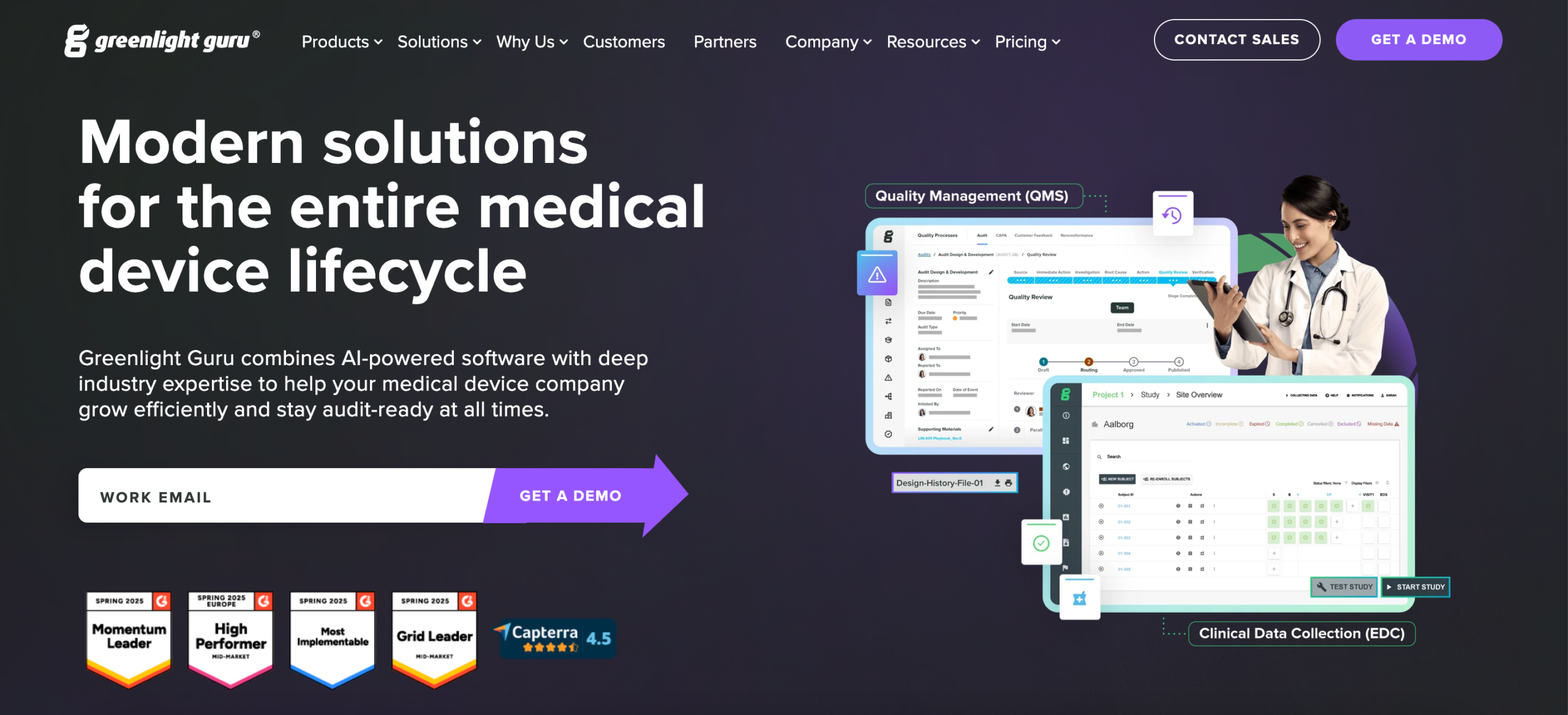
Image source: greenlight.guru
Greenlight Guru is a digital QMS focused on medical device companies that manage design, development, and regulatory compliance across the product lifecycle.
The platform centers on design controls, risk management, and traceability to support compliance with FDA, European Union Medical Device Regulation (EU MDR), and ISO requirements.
It connects user needs, design inputs, outputs, verification, and validation to maintain a living design history file (DHF).
The system also supports document management with version history and audit trails, CAPAs, audits, supplier records, and training workflows that meet Title 21 Code of Federal Regulations Part 11 requirements.
Key Features
- Design controls with full lifecycle traceability
- Risk management aligned with ISO 14971
- CAPA and nonconformance management
- Internal and supplier audit management
- Training management with automatic retraining on document changes
- Centralized document management with approvals and audit trails
Strengths and Limitations
Users often point to the depth of design and risk workflows. Reviews note that design items link directly to documents and risk controls.
Risk analyses also support multiple methodologies and regulatory terms, which help teams maintain inspection-ready records.
Users also mention constraints. Quality event workflows follow a fixed structure, and analytics remain basic.
Some teams report difficulty collecting electronic signatures from external suppliers without granting system access.
3. ETQ Reliance
Image source: etq.com
ETQ Reliance is used by organizations with complex compliance demands and multiple locations. The platform centers on configurable QMS processes, shared quality data, and integration with existing systems.
Teams use it to manage documents, audits, training, CAPAs, and analytics within one cloud-based environment.
ETQ Reliance emphasizes configuration and data consistency. Common data flows across applications through linking and data inheritance.
Built-in integrations support connections with ERP and HR systems, which help keep training, compliance, and quality records synchronized.
Mobile access allows users to collect data, capture images, and complete tasks from the shop floor or the field.
Key Features
- Configurable workflows and security by role, location, and product
- Centralized document management with revision tracking
- Audit planning, execution, and reporting
- CAPA management
- Training management with compliance tracking
- Analytics dashboards and scheduled reporting
Strengths and Limitations
Users often point to accountability. Audits, CAPAs, and documentation stay assigned to clear owners. ERP and HR integrations help keep training and compliance records up to date.
Some users also mention fewer manual errors when departments share data in one system.
However, users also report trade-offs. Workflow and document changes can require added coordination after setup.
Several reviews mention a dated interface and slower navigation when reviewing large record sets. Some users report system downtime that pauses work until service resumes.
4. Qualityze
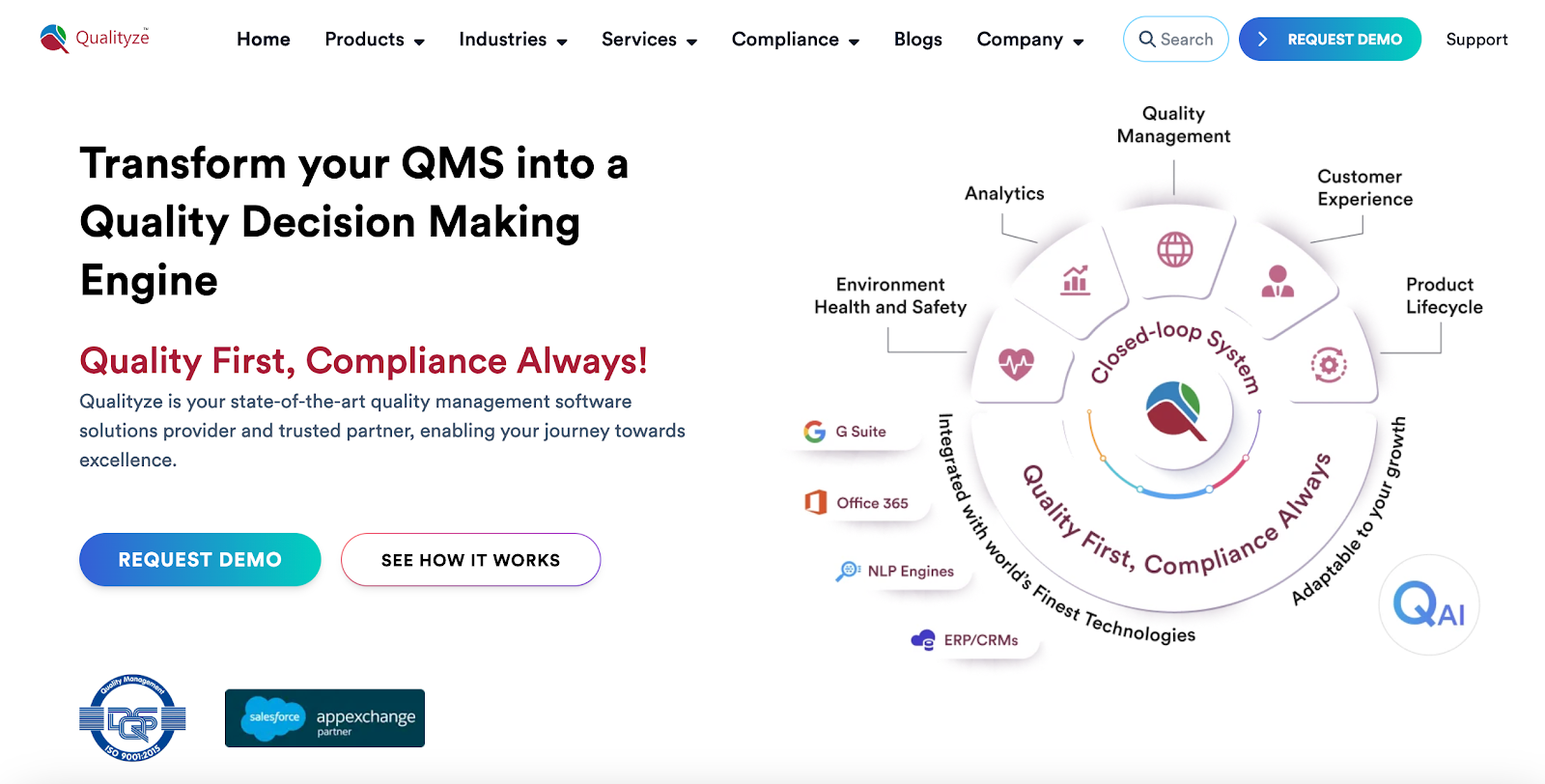
Image source: qualityze.com
Qualityze is a digital QMS built on the Salesforce platform and used by organizations that manage regulated quality operations. It supports compliance processes defined by the ISO and FDA.
The platform focuses on configurable workflows and centralized quality data to streamline quality management processes across teams.
AI-powered tools assist quality teams during CAPA investigations by analyzing inputs and recommending corrective actions.
Document and audit workflows run through configurable processes that support approvals, change tracking, and audit coordination across the product lifecycle.
Key Features
- AI-assisted CAPA management with standardized workflows
- Document management with version control and approvals
- Change management with configurable workflows
- Audit planning, scheduling, and notifications
- Salesforce-based platform with native integrations
- Configurable fields and templates across quality processes
Strengths and Limitations
Users often mention integrations and configurability. Reviews point to Salesforce connectivity and flexible workflows that support compliance processes across different teams.
Some users also mention responsive ongoing support during QMS implementation, especially when configuring fields and workflows.
On the other hand, users describe the initial setup as demanding, especially for organizations transitioning from basic tools.
Reviewers also note the absence of a self-serve free trial, which requires a sales-led demo before hands-on access.
5. ZenQMS
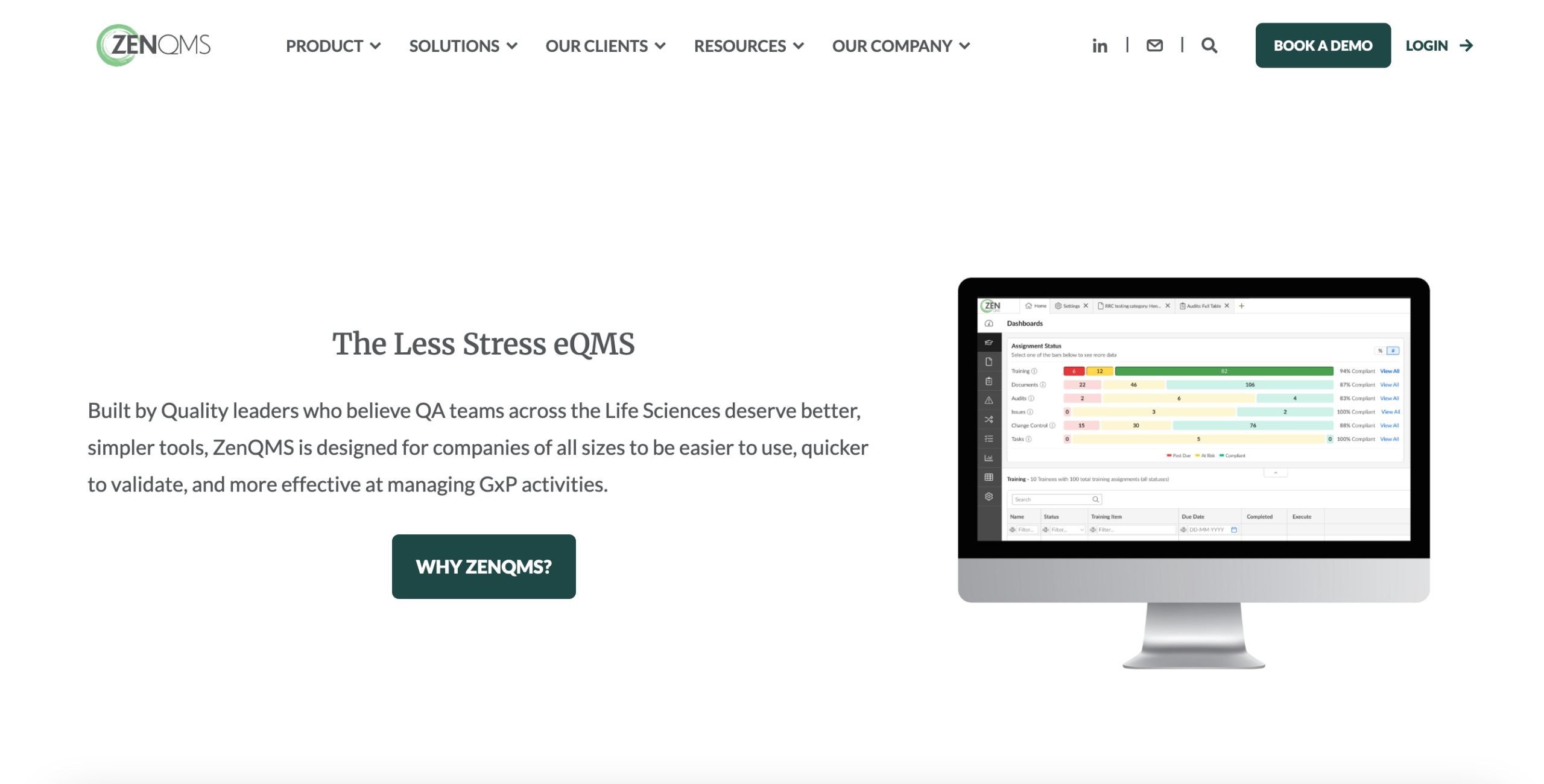
Image source: zeqms.com
ZenQMS manages Good Practice (GxP) activities across training, documents, audits, and CAPAs. The platform supports compliance with Title 21 Code of Federal Regulations Part 11, Annex 11, and applicable ISO requirements.
ZenQMS focuses on configurable workflows that reflect existing quality processes. The quality management software also supports product lifecycle management from early development through commercial manufacturing.
All users receive access to every module from day one, which supports consistent use in quality assurance, regulatory, and operations.
ZenQMS also includes built-in electronic signatures through ZenSign, allowing external partners to sign records inside the system without third-party tools.
Key Features
- Training management with dashboards, reminders, and reporting
- Document management with version control and electronic signatures
- Change control with configurable, closed-loop workflows
- Issues management for CAPAs, deviations, and complaints
- Audit and supplier management with planning and tracking
- Insights dashboards for compliance and quality trends
Strengths and Limitations
Users often reference workflow configurability and form design. Reviewers mention conditional logic, custom forms, and flexible signature options that support different risk profiles and organizational sizes.
Some users also note a smoother implementation process when moving away from paper or hybrid systems.
At the same time, users point out missing native integrations with external document repositories such as SharePoint.
Formatting issues can appear when online forms convert to PDF. ZenSign also requires repeated manual entry for external signers, which can slow approvals.
6. Ideagen
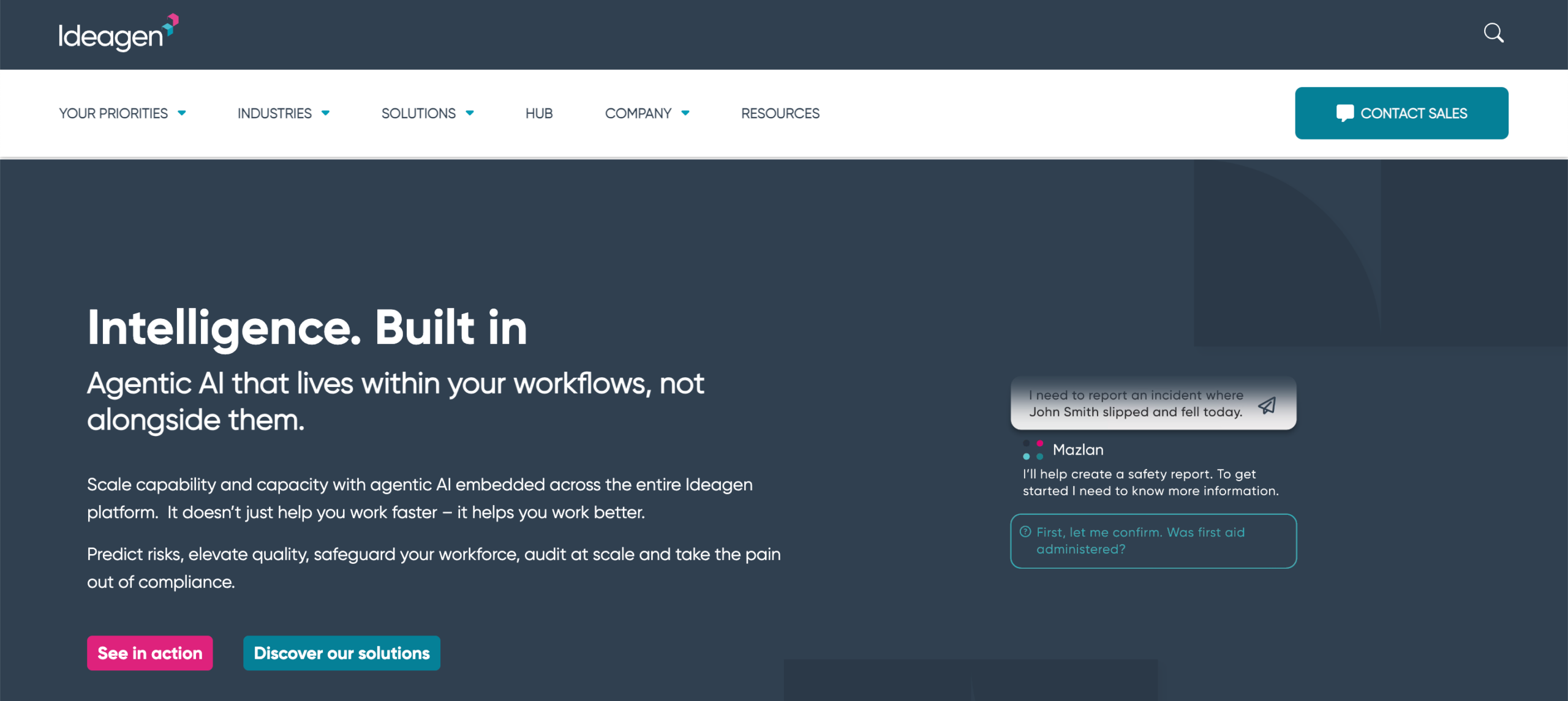
Image source: ideagen.com
Ideagen Quality Management supports organizations that run quality programs across multiple sites and regulatory regions.
Different interpretations of ISO standards and regional requirements often disrupt process quality and delay decisions.
Ideagen addresses this by centralizing quality data and automating workflows within one integrated solution.
The platform applies embedded AI to reduce manual quality work across distributed operations.
Document Review agents handle version control and approval routing. Incident investigation agents guide the investigation steps.
Compliance monitoring agents track regulatory changes tied to ISO standards and Medicines and Healthcare products Regulatory Agency (MHRA) requirements.
Key Features
- Centralized document control with automated revision history
- Artificial intelligence agents for document review and investigations
- Audit planning, execution, and observation tracking
- Regulatory change monitoring for ISO and MHRA requirements
- Role-based access across multiple sites
- Mobile capture of non-conformances
Strengths and Limitations
Users frequently mention audit and safety management workflows. Feedback highlights audit planning, execution, checklist creation, and tracking observations through closure.
Safety reporting, risk assessment, and action tracking from meetings are also referenced.
Conversely, users describe high administrative effort. Gaps between the document and people modules slow updates to roles, competencies, and training.
Some users also report difficulty locating information and limited visibility into team-level compliance.
7. Qualio

Image source: qualio.com
Qualio is a cloud-based digital QMS that replaces paper-driven quality operations with a fully electronic platform.
It’s used by regulated organizations, including medical device manufacturers, pharmaceutical companies, and biotech firms.
As a quality management software solution, Qualio supports digital transformation by shifting document control, approvals, and records into a paperless system that meets the FDA requirements.
Qualio focuses on document-centric quality operations. Document management serves as the core, with training records, quality events, supplier interactions, and design controls connected to the same document stack.
Compliance Intelligence supports data collection for audits, automates gap analysis across frameworks, and tracks evidence continuously.
Key Features
- Paperless document management with compliant electronic signatures
- Training records linked to controlled documents
- Risk management integrated into product design workflows
- Audit management with continuous compliance monitoring
- Supplier quality management with centralized oversight
- Design controls supported by a compliant document stack
Strengths and Limitations
Users often point to usability and configuration depth. Feedback highlights document drafting, review, approval, and training workflows.
Users also mention the ability to import existing documents during implementation, which reduces disruption during digital transformation.
Despite that, users note oversight limitations. Revision history and reviewer status require opening documents, and managers lack direct visibility into team progress.
Seat-based licensing can also restrict access in environments with high staff turnover, which may require hybrid processes outside the system.
Operate a Reliable Digital Quality Management System Using TLM

Most digital quality management systems force tradeoffs. Some bury teams in setup and configuration. Others feel easy early on but struggle once audits, suppliers, and corrective actions increase.
TLM avoids that split by supporting real manufacturing workflows while maintaining the depth required for regulated environments.
Documents, training, CAPAs, audits, and reporting are managed in a single system rather than across disconnected tools. That connection helps teams resolve quality issues earlier, before they affect audits or downstream outcomes.
Earlier issue resolution leads to better results. When quality teams spend less time managing systems, they can focus on improving processes that enhance product quality and strengthen customer satisfaction.
That consistency matters as expectations increase in regulated markets.
This foundation also enables business growth. As teams expand and compliance demands increase, quality operations need to handle more activity without breaking down.
TLM keeps quality work consistent for users, sites, and audits, which helps organizations exceed customer expectations without adding operational strain.
FAQs About Digital Quality Management System
What is a digital quality management system?
A digital quality management system is software that centralizes quality activities such as document control, training, audits, and corrective actions.
It replaces paper-based and manual processes with electronic workflows and records. Organizations use it to maintain compliance and address quality issues earlier.
What are the four main components of QMS?
The four main components are quality planning, quality control, quality assurance, and quality improvement. Planning defines how quality goals will be met.
Control and assurance check performance and compliance, while improvement focuses on preventing repeat issues.
What is the best QMS software?
The best QMS software supports how quality teams operate without adding unnecessary overhead. Core processes such as documents, training, audits, and corrective actions should connect within one system.
TLM is often chosen by organizations that need depth and usability without sacrificing daily execution.
What are the four types of quality management systems?
The four types include quality control systems, quality assurance systems, total quality management systems, and continuous improvement systems.
Each type emphasizes a different stage of managing quality, from inspection to long-term improvement.

 Demos
Demos