


Qualio works for many life sciences teams. It helps organizations reach compliance without a heavy setup.
However, as teams expand, some issues become harder to ignore. Reports don’t always answer questions, and access often stays restricted to admins.
That’s why teams start looking at Qualio alternatives.
This article covers the top quality management system (QMS) options worth considering in 2026. You’ll see how each platform handles audits, documents, training, and risk so you can decide which Qualio alternative suits your organization.
TL;DR
These are the five best Qualio alternatives to consider in 2026:
- TLM
- QT9
- SafetyChain
- MasterControl
- ComplianceQuest
What Is Qualio?

Image source: qualio.com
Qualio is a cloud-based QMS used mainly by life sciences and healthcare organizations.
Quality and compliance groups use it to manage documents, training, audits, and risk in one system.
Many companies adopt Qualio early, when they need to meet regulatory requirements without setting up a complex platform.
Qualio includes core QMS functions such as:
- Document control with review, approval, and version history
- Training management linked to controlled documents
- Audit management for internal and external audits
- Risk and change tracking tied to product development
- Corrective and preventive action (CAPA) and nonconformance workflows
- Supplier documentation and audit records
As programs expand, many organizations compare Qualio with other QMS tools that offer more automation and reporting features.
Why Organizations Look for Qualio Alternatives
Qualio handles core quality processes well. As quality activity increases, many organizations start to notice where the system starts to hold them back.
Reporting is often the first issue. Answering audit or leadership questions usually requires exporting data and reviewing it outside the system.
Managers also struggle to see open tasks or training status without admin access, which slows reviews.
Automation stops early. Document updates don’t carry context from prior versions. Audits, CAPAs, and change requests remain loosely connected.
Quality staff spend time checking records by hand to confirm approvals and changes.
Supplier management stays document-based. Files live in the system, but tracking audit results or recurring supplier issues requires manual follow-up.
As more departments take part in audits, training, and change management, many organizations start comparing Qualio with competitors that offer better scalability.
5 Best QMS Software Solutions to Replace Qualio in 2026
Here are the most popular Qualio alternatives organizations evaluate when they outgrow basic QMS tools.
1. TLM
Total Lean Management (TLM) follows established quality procedures instead of forcing new ones.
Quality leaders configure forms, fields, and approval orders to match internal processes and regulatory standards.
When procedures change, teams update them in the system, which maintains regulatory compliance and protects data integrity.
Consolidates Quality Records
TLM consolidates audits, corrective and preventive actions, document control, training, supplier records, and risk data into one system.
When an audit identifies an issue, the corrective action, revised document, and required training link to the same record. This linkage supports verification and protects product quality across the product lifecycle.
Separates Manager and Employee Work
TLM separates responsibilities between managers and other users. Managers review audits, approve changes, and run management reviews in the main application.
Other users complete assigned tasks through a web app that shows only relevant actions. This separation keeps quality work accurate and organized.
Key Features
- Custom forms with email notifications and approval routing
- Custom fields and module names that match internal terminology
- AI-powered document search and compliance reviews
- Integrated risk, change management, supplier, and production modules
- Validation templates aligned with the International Organization for Standardization (ISO) and the Food and Drug Administration (FDA) required standards
- Connection tools that share data with enterprise resource planning (ERP) and other business systems
Regulated Manufacturing and MedTech Use Cases
Manufacturers, including medical device companies, use TLM to meet regulatory standards across quality, environmental, safety, and health programs.
The platform supports compliant workflows and audit preparation. A supported 30-day free trial lets organizations upload existing documents and test workflows before a purchase decision.
Organizations that evaluate Qualio alternatives get connected workflows, unified records, and real-time insight into audit status and open actions with TLM.
Book a demo to see how TLM works in practice!
2. QT9
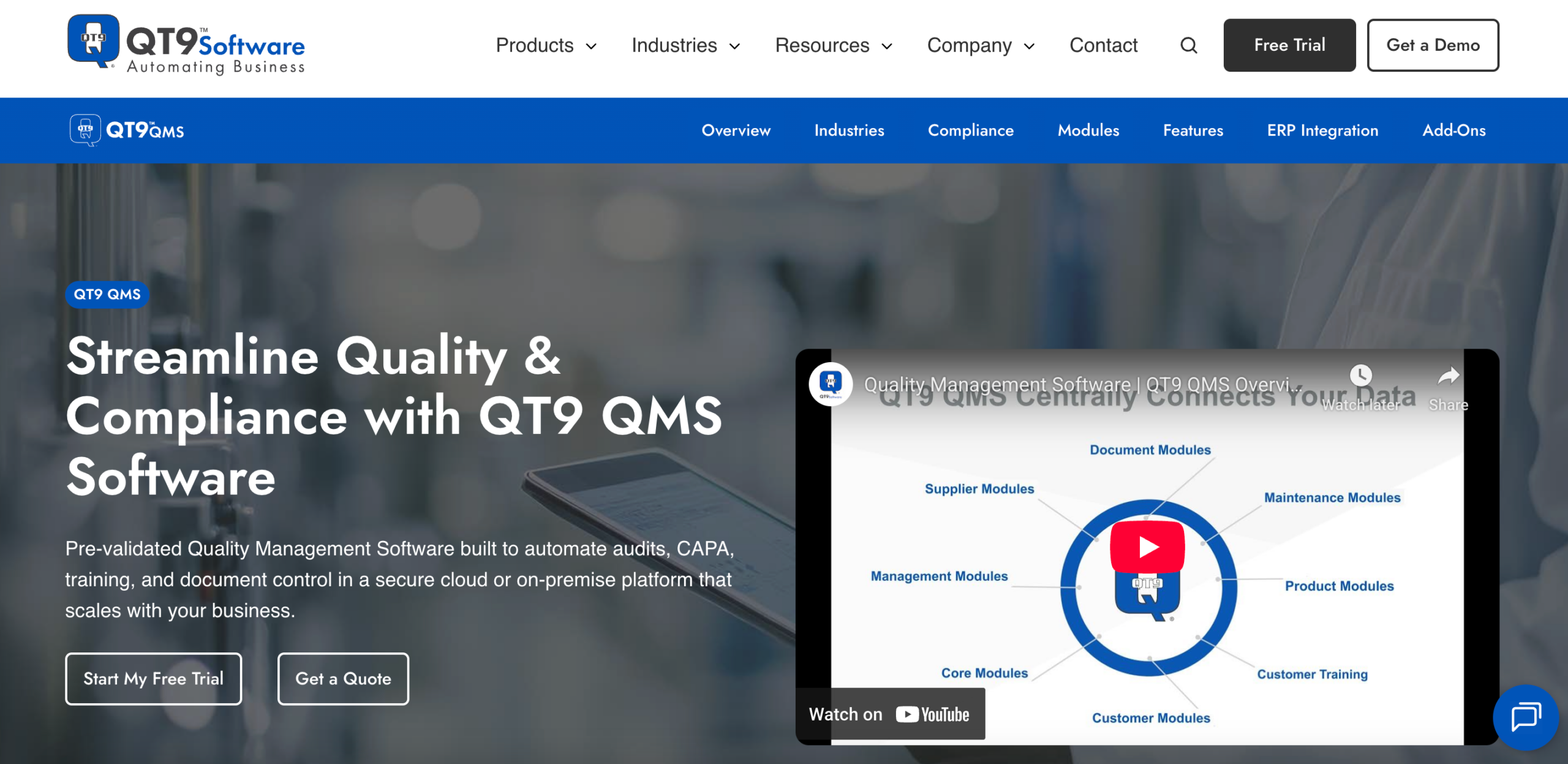
Image source: qt9software.com
QT9 is an electronic QMS used by medical device, pharmaceutical, and biotech companies. It manages documents, audits, training, CAPAs, and risk in one system.
QT9 supports ISO and FDA requirements and runs as cloud-based or on-premises software. Organizations choose QT9 to replace manual audit tracking and scattered compliance records.
QT9 is helpful for startups and mid-sized companies that want structured quality software without a heavy technical setup.
Key Features
- Document control with revision history and approval workflows
- Audit management with scheduling, findings, and audit trails
- CAPA and nonconformance tracking with assigned actions
- Training and employee competency tracking with reminders
- Risk management aligned with ISO 14971 and ICH Q9
- Change control with approval workflows
- Supplier quality and customer feedback tracking
- Equipment, inspection, and deviation management
- Dashboards and reports with filters, drilldowns, and exports
Strengths and Limitations
QT9 includes customer support and onboarding resources that help users get oriented. Set up guidance and training videos to explain how the system works without long ramp-up periods.
Dashboards show audit status, open CAPAs, and training completion without heavy navigation.
However, some constraints appear during daily use. The interface looks busy at first, and several reports need configuration before they can answer specific questions.
Continuous improvement tracking relies on existing modules rather than a dedicated feature. During periods with high audit volume, reporting can slow reviews.
3. SafetyChain
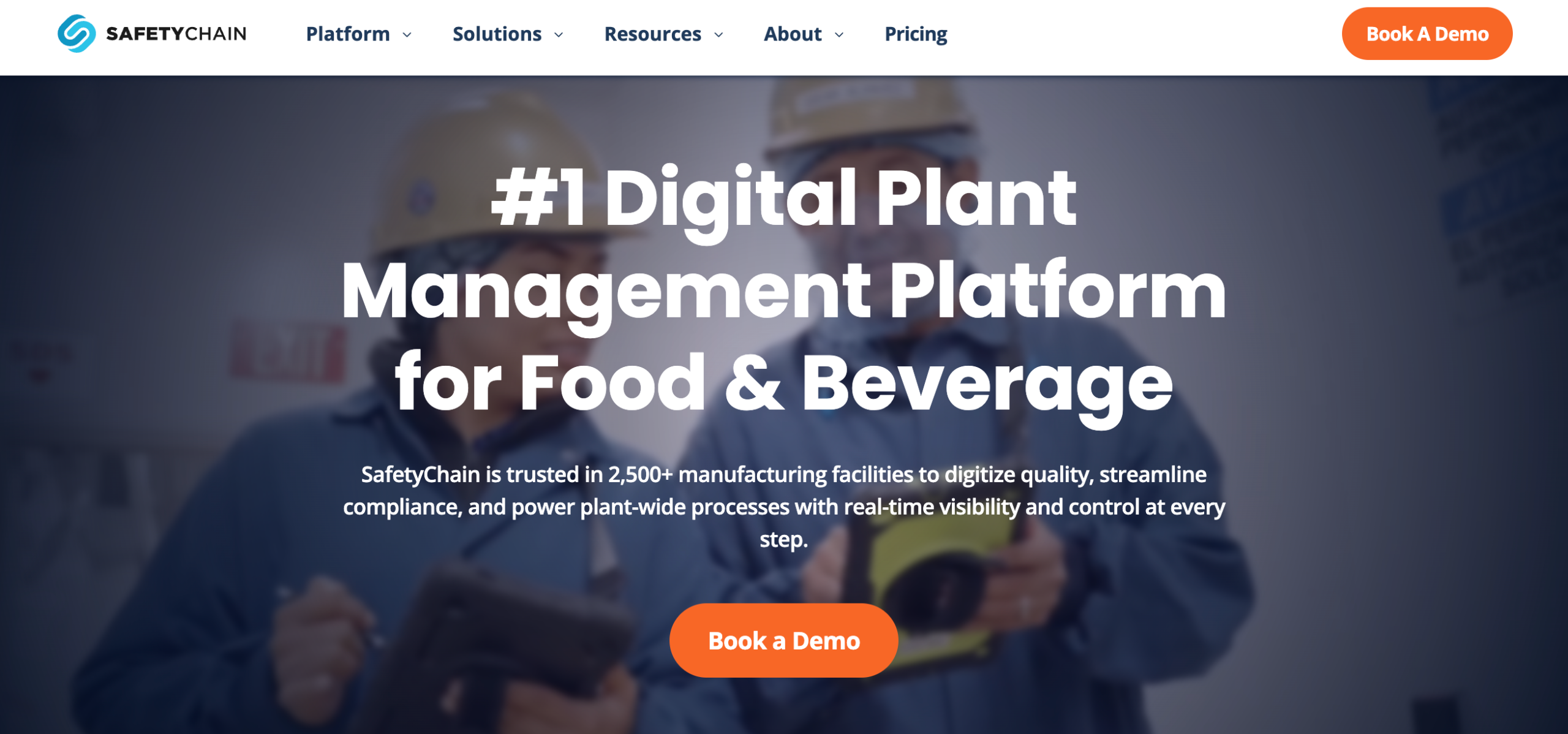
Image source: safetychain.com
SafetyChain is a digital quality and plant management platform used mainly in food, beverage, and consumer goods manufacturing.
Organizations use it to manage quality processes on the production floor. The system replaces paper checks with digital records captured during production.
SafetyChain focuses on food safety and regulatory compliance. Manufacturers use it to meet Global Food Safety Initiative (GFSI) schemes, Safe Quality Food (SQF), Food Safety System Certification (FSSC), and Food Safety Modernization Act (FSMA) requirements.
Key Features
- Hazard analysis critical control point (HACCP), digital quality, and food safety checks
- In-process and finished product testing
- CAPA, incident tracking, and root cause analysis
- Configurable forms with photo evidence and context
- Dashboards for reporting and task tracking
- Pre-shipment reviews and specification verification
- Supplier and co-manufacturer oversight
- Traceability across raw materials, lots, and batches
- Secure auditor access with audit reports
Strengths and Limitations
SafetyChain supports production environments where operators record quality checks during work. Supervisors review failed checks and open tasks without waiting for manual reports.
Dashboards consolidate audits, inspections, and follow-ups in one place, reducing review time during inspections.
Auditors receive access to records, corrective actions, and verification data. Reports generate quickly when customers or regulators request documentation.
Despite that, the platform relies on active data entry. Forms should stay open, which limits updates after the fact. Managing shared resources across many forms takes time.
Reporting tools cover standard needs but don’t always support deeper analysis. Load times can also slow work during periods of high activity.
4. MasterControl
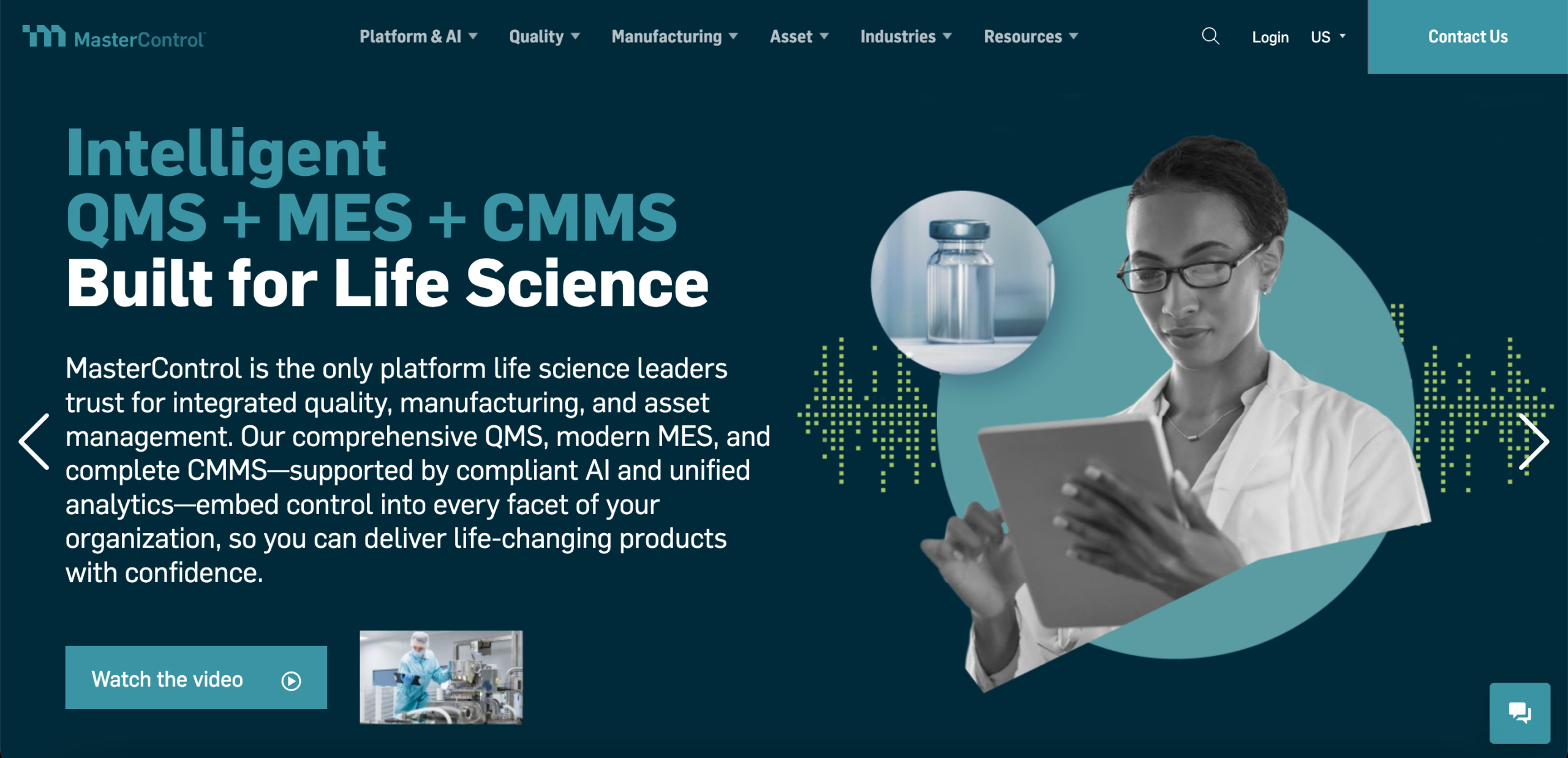
Image source: mastercontrol.com
MasterControl is an enterprise QMS used by medical device, pharmaceutical, and biotech companies.
Organizations use it to manage documents, audits, training, CAPAs, risk, and supplier quality in one platform.
Companies usually adopt MasterControl when quality operations span multiple teams, locations, and products.
Manufacturing modules such as electronic batch records and device history records link quality records with production data.
Key Features
- Document control with version history and electronic signatures
- Workflow builder for audits, training, and corrective actions
- Supplier quality management with tracking
- Manufacturing modules for batch records and work instructions
- Dashboards for audit status, training completion, and CAPA activity
- Reporting and analytics for quality trends
- Validation tools for regulated environments
- Integration with ERP and manufacturing execution systems
Strengths and Limitations
MasterControl supports large, complex quality programs. Training resources help users learn role-based tasks. Manufacturing modules connect quality records to production.
However, the interface looks dated. Many workflows require multiple steps. Reporting tools draw mixed feedback, especially older report formats.
Customization usually requires vendor involvement, which slows changes. Performance can drop during peak usage, and session timeouts interrupt work.
5. ComplianceQuest
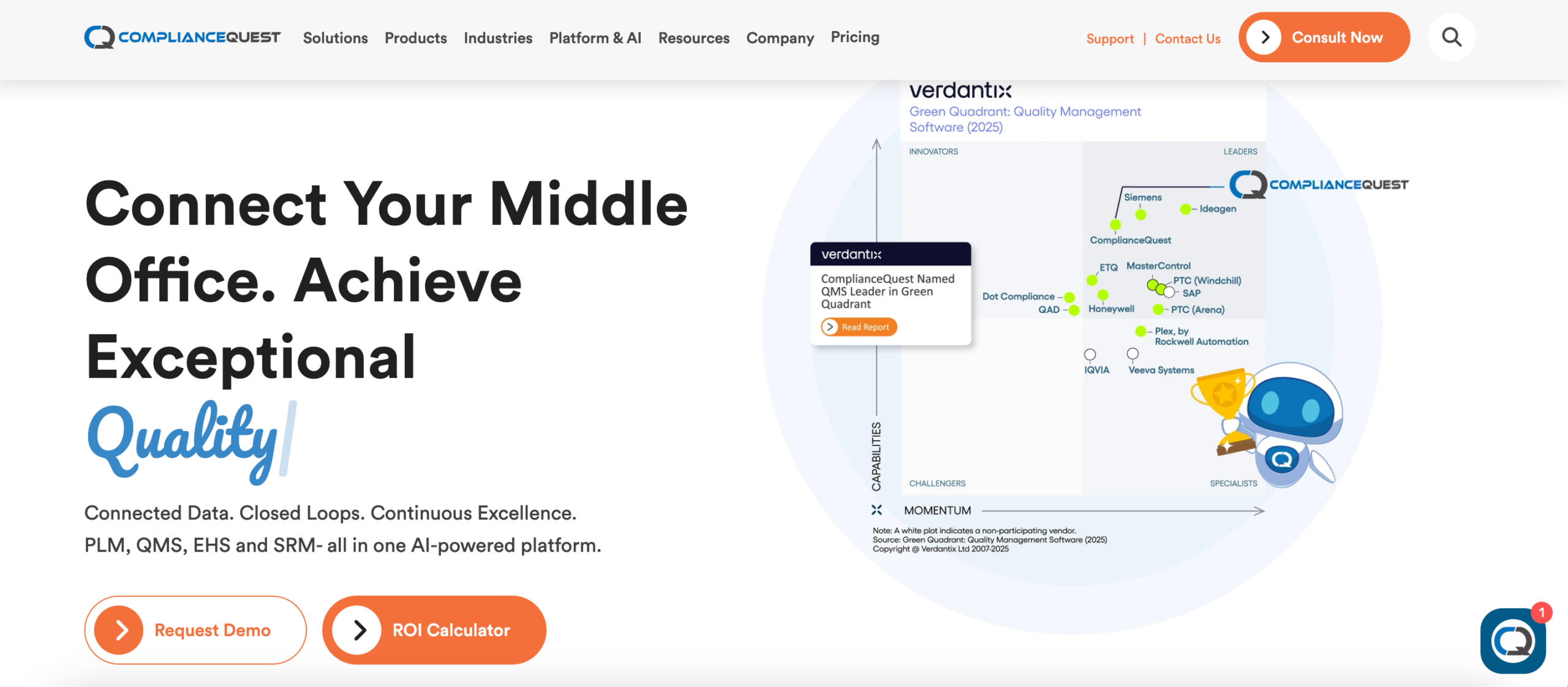
Image source: compliancequest.com
ComplianceQuest is a cloud-based QMS that runs on Salesforce. Organizations use it to manage audits, CAPAs, change control, risk, equipment, and product lifecycle records.
Quality data stays connected to customer, supplier, and operational records, which reduces system hopping during reviews.
Many organizations choose ComplianceQuest when Salesforce already runs sales or service operations.
Quality teams can link audit findings to products, equipment, or suppliers and track follow-up actions in the same environment.
Key Features
- Audit management with scheduling, workflows, and calendar views
- CAPA and change control connected to investigations and risk records
- Product lifecycle and quality records managed on Salesforce
- Equipment and calibration tracking aligned with ISO requirements
- Dashboards for audit status, open actions, and risks
- Analytics to analyze repeat issues and overdue items
- Pre-validated setup for regulated environments
- Integration with Salesforce apps and external systems
Strengths and Limitations
ComplianceQuest offers deep configuration. Quality teams can create approval steps, fields, and workflows that match how audits and CAPAs already run.
Salesforce integration keeps quality records in the right place for leadership reviews. Real-time reporting helps teams monitor audit progress and open actions without manual exports.
On the other hand, setup takes time. The default configuration feels complex, and most organizations need Salesforce administration experience to configure the system properly.
Customization delays early use, and some users report slow performance or system freezes. Hardware requirements may also exceed what older machines can handle.
Replace Qualio’s Limitations With TLM

Qualio works for early quality programs. As audit volume increases and more users need access, many organizations start looking at Qualio alternatives.
TLM stands out for a simple reason. The system lets teams update forms, approval orders, and records without vendor involvement. Audits, CAPAs, document revisions, and training records stay connected.
Managers review overdue actions and approvals in one dashboard. Employees see only assigned tasks. That replaces email follow-ups, shared trackers, and manual status checks.
TLM also helps teams drive continuous improvement through connected records. Repeated findings, overdue actions, and audit trends stay visible inside the system.
Knowledge stays documented and accessible instead of spreading across inboxes or personal notes.
Other platforms on the market focus on narrower problems. Some emphasize production data. Others center on enterprise reporting or product design controls. Each reflects a different expectation for how quality work should function.
The right choice depends on how audits get reviewed, how changes move through approval, and how many people need system access.
FAQs About Qualio Alternatives
What is the alternative to Qualio?
Several platforms serve as Qualio alternatives, including TLM, QT9 QMS, SafetyChain, MasterControl, ComplianceQuest, and Greenlight Guru.
Each option addresses different quality challenges, such as audit volume, manufacturing oversight, or product design controls.
Is Qualio a quality management system?
Yes. Qualio is a quality management system used mainly by life sciences organizations. It helps teams ensure compliance by managing documents, training, audits, risk, and corrective actions in one system.
What is the best QMS software?
There is only one type of quality management system, yours. Therefore, the best QMS software is the one that can best adapt to how your QMS should work at your company.
Many organizations consider TLM when they need more control over approvals, records, and audits, as TLM is probably the best at adapting to customer needs using system settings, custom fields, and the new custom form builder.
It also offers free and sponsored update projects that add specific capability to either the main app, web app, or both TLM applications as part of our Rapid Update support capability.
What is the starting price for QMS software?
Starting price varies widely depending on the platform, number of users, and required modules. Some systems appear affordable upfront, but increase costs as access expands.
Organizations should expect pricing to reflect long-term usage, not just initial setup.


 Demos
Demos