

You don’t replace a quality management system (QMS) on impulse. When companies start comparing ETQ competitors, it’s usually after months of adjusting workflows or managing system constraints.
ETQ Reliance is an established platform with document control, audit management, and corrective and preventive action (CAPA) capabilities.
Industry requirements, operational complexity, and reporting expectations determine whether a system keeps pace with production and compliance demands.
Below, you’ll find the leading ETQ competitors for 2026 and what sets each apart.
TL;DR
These are the top five ETQ competitors to evaluate this year:
- TLM
- TrackWise
- QT9 QMS
- SafetyCulture
- Greenlight Guru
What Are ETQ’s Core Capabilities?
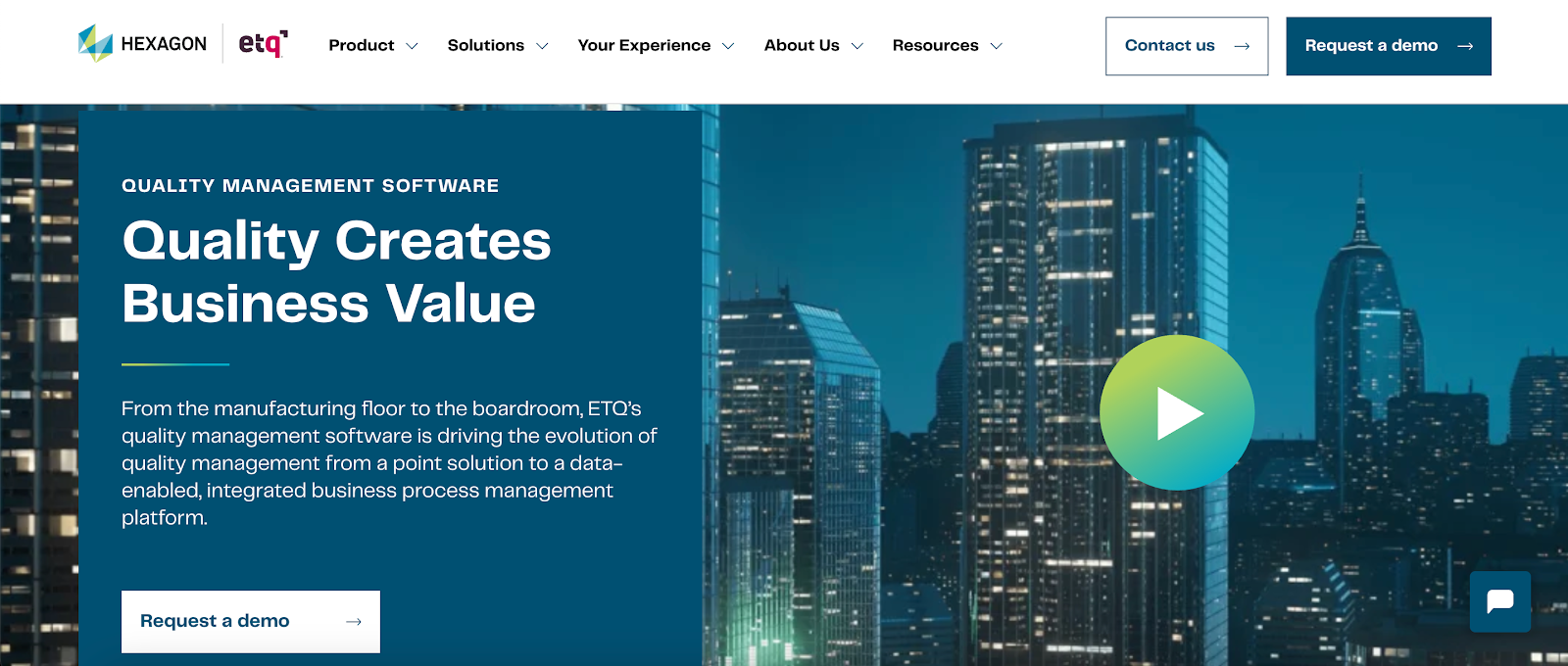
Image source: etq.com
ETQ provides a quality management system tool best known for its platform, ETQ Reliance.
Organizations use it to manage document control, audits, nonconformances, employee training, and corrective and preventive actions within one system.
ETQ helps teams manage quality processes with greater precision and maintain audit readiness. Rather than relying on disconnected tools, they track records, monitor issues, and maintain traceability in a single environment.
The platform also includes reporting dashboards that enable leadership to review performance, monitor risk, and prepare for regulatory inspections.
Manufacturers, life sciences companies, and food producers use ETQ to meet strict compliance and documentation requirements.
Common Challenges That Lead Teams to ETQ Competitors
Quality managers, compliance officers, and operations leaders usually don’t look at ETQ competitors without reason.
The search often starts after months of minor operational frustrations that begin to add up.
Here’s what commonly triggers the evaluation:
- Updating workflows requires more coordination than expected.
- Searching large document libraries takes multiple attempts.
- Closing corrective and preventive actions moves more slowly than planned.
- Training records and audit documentation require extra follow-up.
- Reporting takes time to prepare before a leadership review.
- System downtime disrupts production or audit schedules.
Individually, these issues seem manageable. Over time, they slow response times and cause pressure during inspections or internal reviews.
When quality leaders explore ETQ Reliance alternatives, they’re looking for a system that keeps compliance intact while making daily quality work more efficient.
Top ETQ Reliance Alternatives You Should Know in 2026
Below are five credible ETQ Reliance alternatives, each suited to different regulatory demands, industries, and levels of complexity.
1. TLM
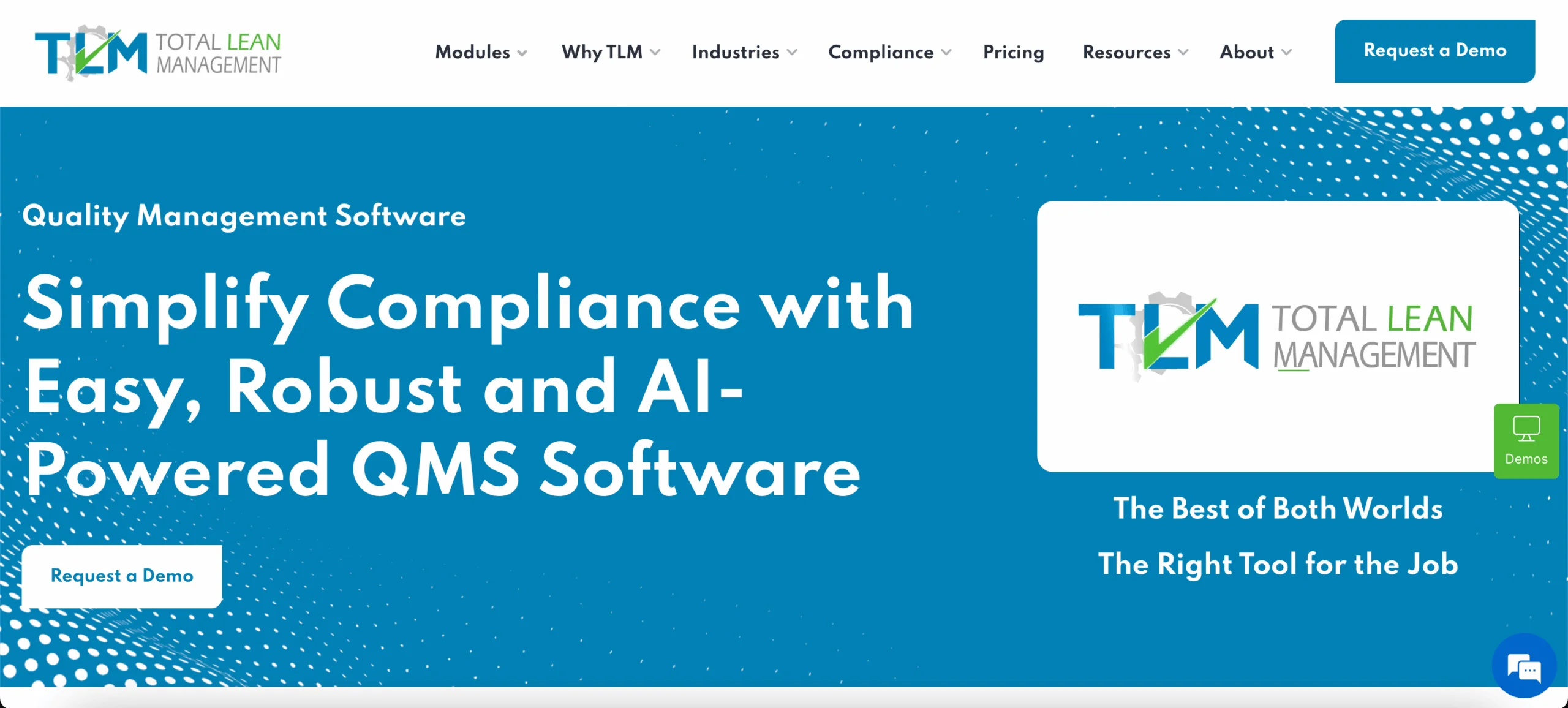
Total Lean Management (TLM) is one of the most comprehensive platforms for evaluating ETQ competitors.
It delivers a full QMS with a primary application for administrators and a companion web app that distributes daily quality tasks to employees.
Broad ISO and FDA Coverage
TLM supports the International Organization for Standardization (ISO) quality standards, including ISO 9001, 13485, 17025, 16949, 27001, and 22000. Both applications comply with 21 CFR Part 11 requirements.
Medical device companies can use validation template packages to expedite ISO 13485 certification and reduce documentation burden during inspections.
You can deploy TLM on your own servers or in a hosted environment, depending on your IT requirements.
Configuration That Matches Your Processes
TLM allows quality leaders to adjust modules, rename fields, and create custom forms without waiting on outside development. Workflows can reflect how your organization already operates, which reduces retraining and disruption.
The dashboard consolidates open tasks from every module into one view, so employees know what requires attention.
Key Features
- Audit management with risk-based scheduling and consolidated reporting
- CAPA management with structured workflows and root cause analysis
- Document control with automated review assignments and integrated training links
- Deviation tracking connected to related quality records
- Equipment calibration management with maintenance scheduling and barcode labeling
- Electronic records with approval routing and retention tracking
- Supplier approval and contact management linked to quality workflows
- AI-assisted document review and query support
- Integration tools for connecting business systems
- Multi-factor authentication controls
Why Consider TLM Over ETQ
TLM manages audits, corrective actions, supplier oversight, document control, and equipment calibration in one system.
If you run a regulated manufacturing operation and need broader coverage without frequent system rework, TLM is an ideal ETQ alternative.
Schedule a demo and see how TLM performs with your own records and workflows!
2. TrackWise
Image source: spartasystems.com
TrackWise, developed by Sparta Systems, is an enterprise quality management system (eQMS) used by pharmaceutical, biotech, and medical device companies.
It connects audits, complaints, risk assessments, supplier oversight, and CAPAs within one platform.
Large manufacturers often choose TrackWise when they need structured workflows and full traceability throughout the product lifecycle.
The platform also extends into TrackWise Digital and AI-enabled tools for organizations that want cloud capabilities alongside established enterprise infrastructure.
Key Features
- Audit lifecycle management from planning to resolution
- CAPA workflows with automated routing and escalation
- Complaint management with investigation tracking and trend analysis
- Supplier QMS with audit tracking and corrective action collaboration
- Electronic regulatory submission capabilities with confirmation tracking
- 21 CFR Part 11 compliance with audit trails and electronic signatures
Strengths and Weaknesses
TrackWise supports complex global operations and allows organizations to tailor workflows and reporting to detailed governance requirements.
It fits environments with layered approval structures and formal risk management programs.
However, some users report inconsistent customer support and limited opportunities for peer collaboration within a broader customer network.
Companies that rely heavily on ongoing guidance may want to weigh that factor during evaluation.
3. QT9 QMS
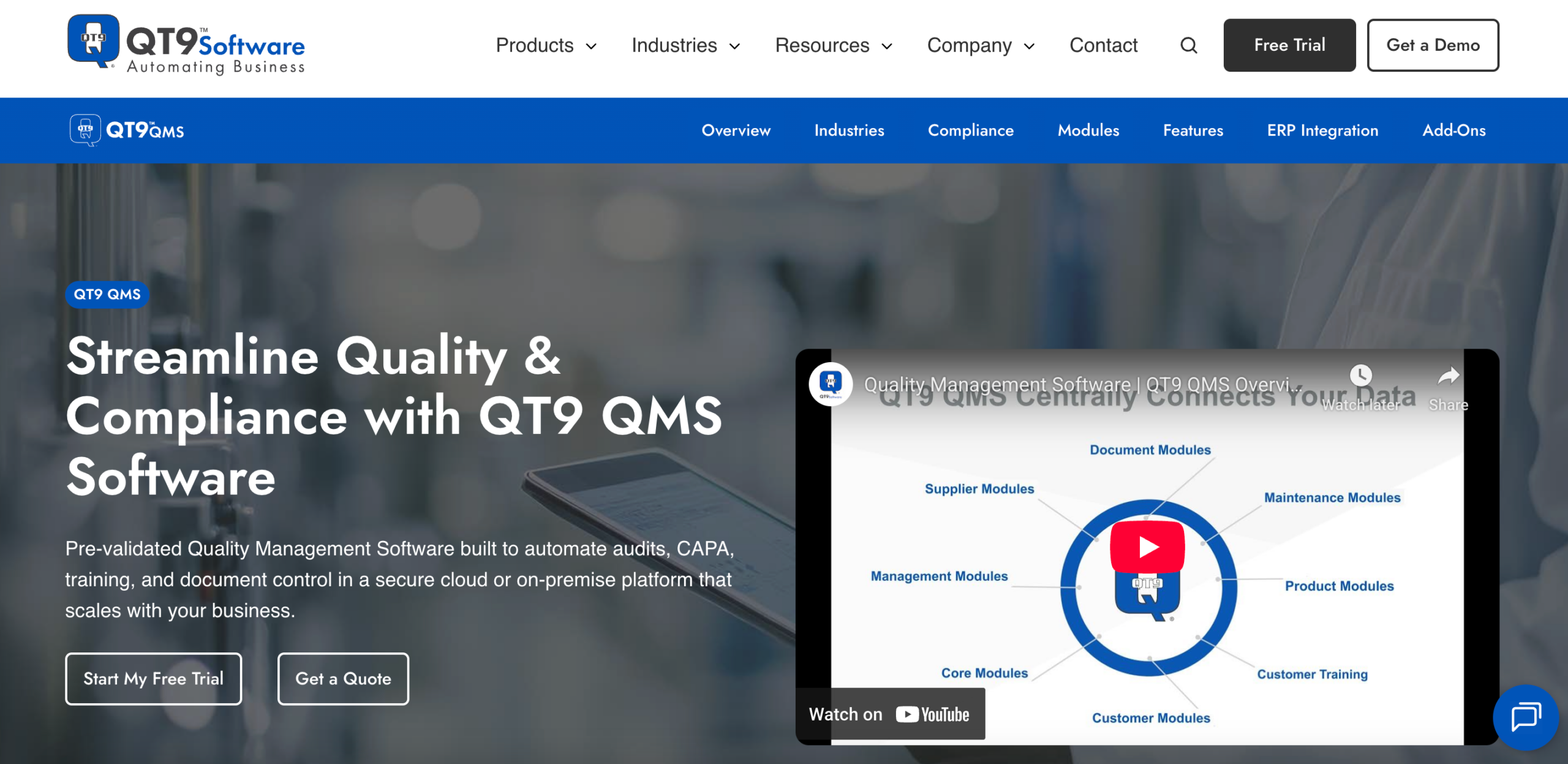
Image source: qt9software.com
QT9 QMS is commonly used by regulated companies that need tighter control over documents, audits, training, and risk management.
It’s available in both cloud and on-premise environments and supports ISO standards and Food and Drug Administration (FDA) requirements.
Organizations look at QT9 when their operations begin to scale, and oversight becomes more complex.
The platform focuses on defined approval workflows, electronic signatures, and automated training assignments connected to document updates.
Key Features
- Document control with automated version tracking and full revision history
- 21 CFR Part 11-compliant electronic signatures and approval routing
- Audit scheduling with real-time tracking and corrective action linkage
- Integrated CAPA management
- Employee training management with automatic assignment triggers
- Risk management with scoring, customizable matrices, and audit integration
- Supplier and third-party audit tracking
- Dashboards for monitoring open tasks, findings, and nonconformances
Strengths and Weaknesses
QT9 brings document control, audits, training, and risk tools into one system, giving quality teams a single platform to manage core processes. Users describe the interface as intuitive and adaptable to internal procedures.
However, some modules may require additional configuration to match specific operational needs.
A few users note that reporting depth, particularly in change request tracking, may not meet the expectations of organizations that depend heavily on detailed trend analysis.
4. SafetyCulture
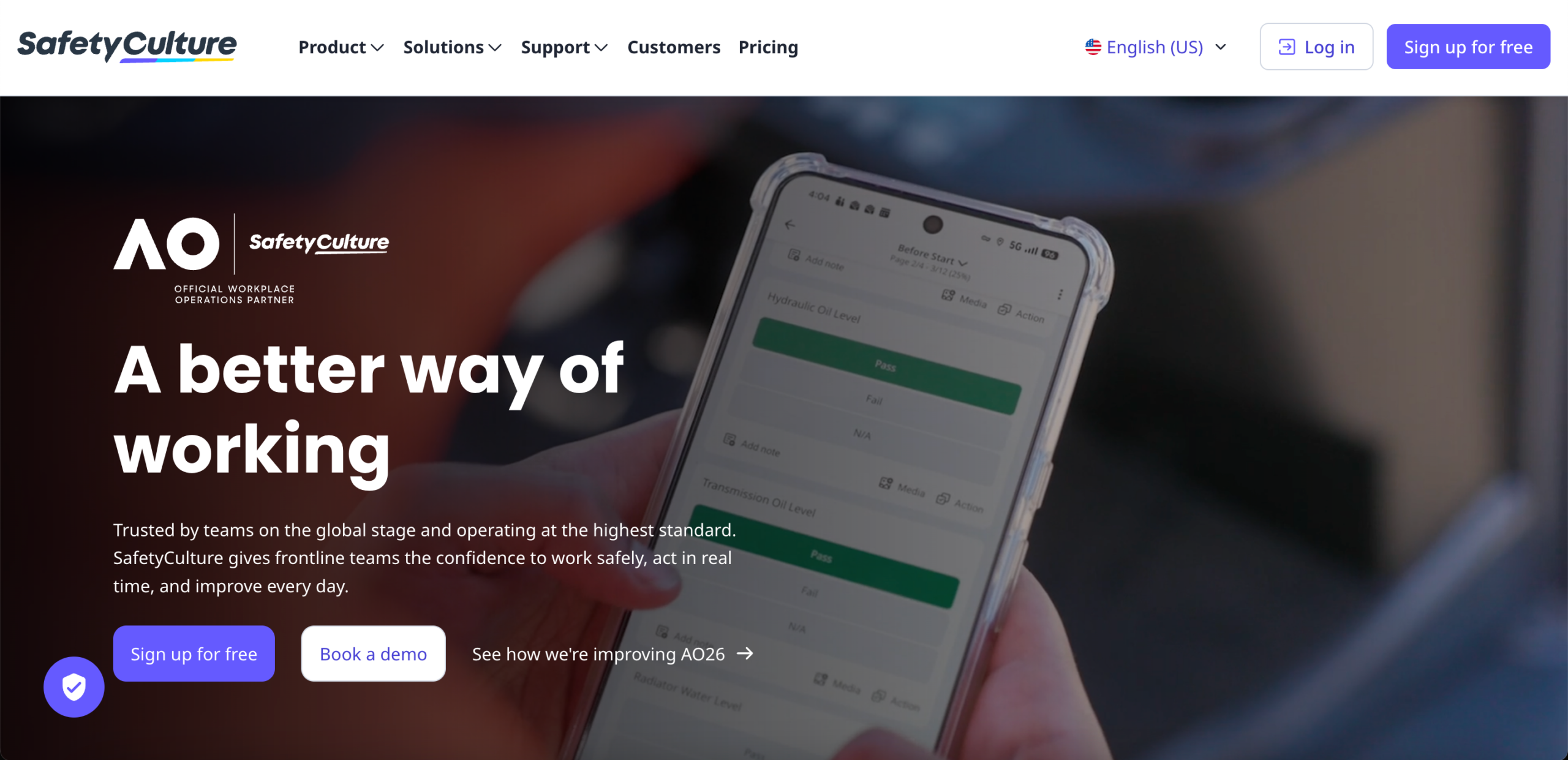
Image source: safetyculture.com
SafetyCulture is a mobile-first platform used by operations and quality teams to manage inspections, safety checks, and frontline reporting.
The platform replaces paper-based inspections with digital checklists that teams complete on mobile devices. You can capture photos, log findings, and assign corrective actions immediately.
Managers review inspection data in real time, which helps them respond faster to recurring issues and protect product quality.
SafetyCulture also supports regulatory compliance by standardizing procedures and documenting audit evidence.
Key Features
- Customizable digital inspection checklists
- Mobile access for completing inspections on-site
- Real-time dashboards to monitor inspection data
- Photo and video capture for audit documentation
- Corrective action tracking linked to inspection findings
- Training tools for safety and quality procedures
- Asset and issue management capabilities
Strengths and Weaknesses
SafetyCulture is recognized for its easy setup and intuitive mobile experience. Most teams implement it quickly and begin collecting usable data without complex configuration.
Even so, organizations that require deeper QMS functionality, such as advanced document control or complex change management, may find it limited.
Reporting customization can also require additional setup, particularly for companies that depend on detailed trend analysis.
5. Greenlight Guru
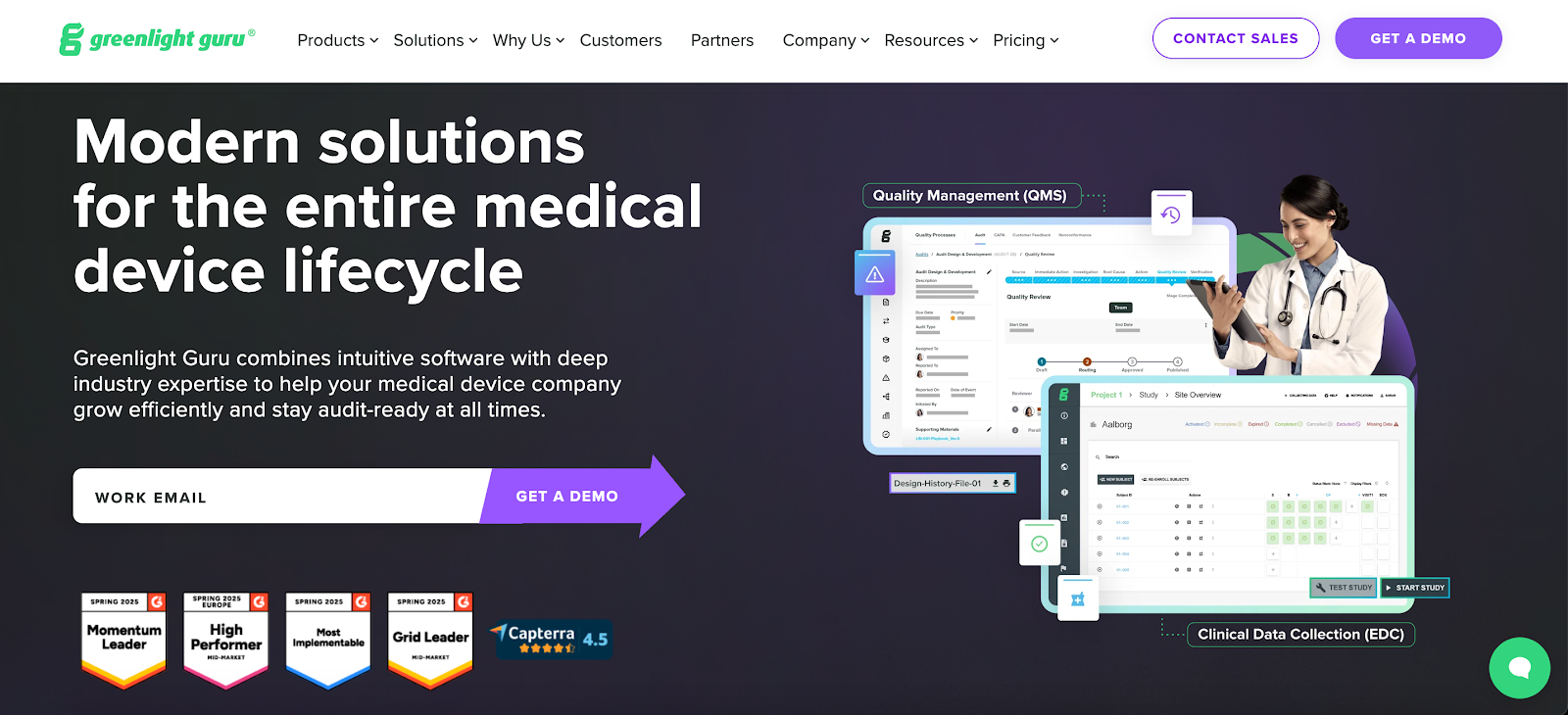
Image source: greenlight.guru
Greenlight Guru is a QMS built specifically for medical device companies. It supports regulatory compliance by connecting design controls, risk management, document control, training, and supplier oversight within one validated system.
The platform focuses on traceability and accuracy throughout product development. You can link user needs, design inputs and outputs, verification, validation, and risk controls inside a design history file.
This connection helps teams document decisions clearly and maintain inspection readiness without relying on separate systems.
Greenlight Guru also manages CAPAs, nonconformances, audits, and training records in the same environment.
When a document changes, related training updates automatically, which helps simplify compliance tracking and reduce missed requirements.
Key Features
- Integrated design controls with end-to-end traceability
- Risk management with connected risk matrices and documentation
- Document control with version history and Part 11-compliant e-signatures
- Corrective and preventive action and nonconformance tracking
- Internal and supplier audit management
- Supplier qualification and performance monitoring
- Automated training assignments triggered by document updates
Strengths and Weaknesses
Greenlight Guru centers on medical device quality assurance (QA) and regulatory affairs (RA) workflows rather than serving as a general-purpose QMS.
Some users appreciate keeping design documentation and risk files inside the same system instead of managing them separately.
Although it meets core compliance requirements, some teams note that search capabilities and analytics could be more advanced.
In addition, certain quality event workflows may need refinement to better reflect internal processes.
Switch to TLM for Comprehensive Quality Management

Selecting a QMS tool is a long-term decision. It affects how you manage audits, corrective and preventive actions, document control, supplier oversight, and regulatory compliance every day.
The platforms covered here serve different priorities. Some concentrate on enterprise governance. Others focus on inspections or medical device design.
Your choice depends on which areas of your quality process need tighter control and better visibility.
TLM stands out as the top alternative for organizations seeking comprehensive QMS coverage within one connected system.
It supports major ISO standards and FDA requirements, includes Part 11-compliant controls, and provides flexible deployment options for on-site or hosted environments.
Integration with enterprise resource planning (ERP) and other business systems helps maintain data consistency, and multi-factor authentication strengthens security.
What makes TLM different is its configurability. Custom fields, adaptable modules, and unified dashboards allow your quality system to mirror how your organization operates rather than forcing unnecessary process changes.
Start TLM’s 30-day free trial and test it using your own documents, records, and procedures!
FAQs About ETQ Competitors
What is the best QMS software?
The best QMS software depends on your industry, regulatory requirements, and how you manage audits, CAPAs, and document control.
TLM is often viewed as a top alternative due to its comprehensive QMS coverage, adaptable workflows, and flexible on-site or cloud deployment.
What does ETQ Reliance stand for?
ETQ Reliance is the name of ETQ’s primary quality management platform. “Reliance” reflects the platform’s goal of providing dependable control over documents, audits, and corrective actions within one structured system.
Is ETQ a QMS?
Yes, ETQ is a QMS vendor. Its ETQ Reliance software includes document control, audit management, corrective and preventive action tracking, training management, and reporting tools to support regulated organizations.


 Demos
Demos